Visiting the Kutná Hora Bone Church: Sedlec Ossuary Day Trip Guide from Prague
Essential visitor guide to Kutná Hora’s Sedlec Ossuary Bone Church and St. Barbara’s Cathedral. Learn train directions from Prague, combo tickets, and photo rules.
Europe is a transcontinental cultural and geographic destination encompassing 44 sovereign nations that provides independent voyagers with borderless Schengen mobility, an interconnected high-speed electrified railway network, and centuries of preserved architectural heritage to achieve efficient, multi-country overland travel.
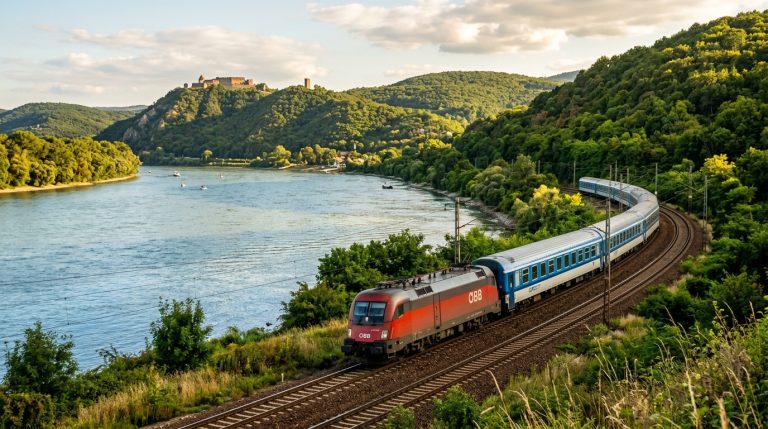
Direct Metropolitan EuroCity service along the Danube corridor connecting Slovakia and Hungary in under 2.5 hours.
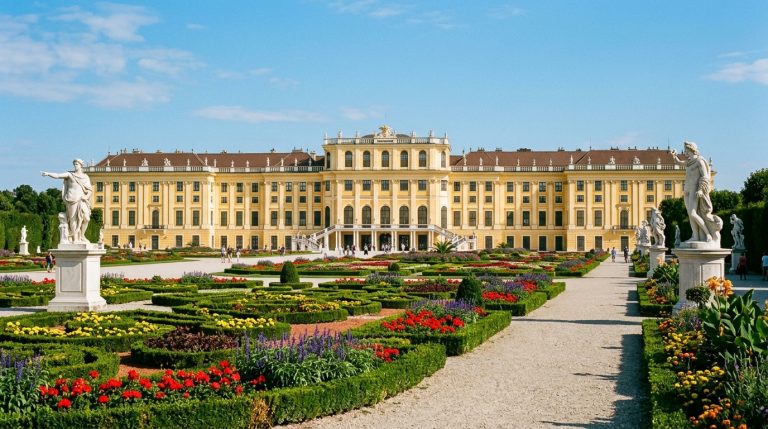
Exhaustive logistics for touring Habsburg imperial staterooms, maze gardens, and Gloriette viewpoints in Vienna.
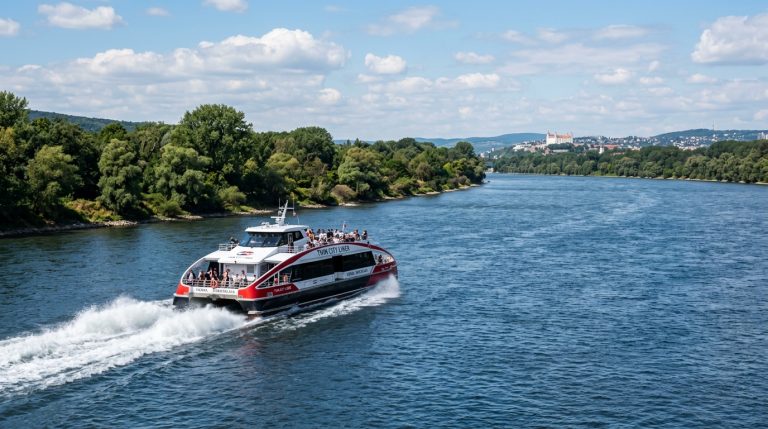
High-speed catamaran transit bridging Austria and Slovakia along the historic Danube river shipping channel.
Complete rail access, ticketing protocols, and historical context for Bohemia’s UNESCO Gothic cemetery chapel.
Navigating the European continent requires understanding its geopolitical divisions, integrated transportation backbones, and varied economic systems. Modern European travel is fundamentally defined by the Schengen Agreement, which harmonizes internal border controls across 29 participating nations. This legal framework permits travelers to journey continuously between member states—such as moving from the Czech Republic into Austria, Slovakia, or Hungary—without encountering static immigration checkpoints. However, non-EU passport holders remain bound by the statutory 90/180-day limitation, requiring precise tracking of cumulative days spent across the entire Schengen perimeter.
Overland mobility forms the centerpiece of European independent exploration. The continental rail infrastructure, operated by national carriers including České dráhy (ČD), Österreichische Bundesbahnen (ÖBB), Železničná spoločnosť Slovensko (ZSSK), and Magyar Államvasutak (MÁV), alongside private open-access operators like RegioJet and Leo Express, creates high-frequency transit trunks between major metropolitan gateways. High-speed EuroCity and Railjet connections link Prague, Vienna, Bratislava, and Budapest within 2 to 4 hours of travel time, terminating in central urban stations that bypass long airport transfers, security queues, and checked baggage surcharges.
Fiscal management across Europe demands destination-specific awareness. While 20 member states share the common Euro currency (EUR), key Central European transit hubs maintain sovereign national currencies: the Czech Republic utilizes the Czech Koruna (CZK), Hungary operates on the Hungarian Forint (HUF), and Poland utilizes the Polish Złoty (PLN). Independent travelers should employ contactless chip-and-PIN bank cards while systematically rejecting Dynamic Currency Conversion (DCC) at merchant point-of-sale terminals and automated teller machines to avoid markup spreads exceeding 8 to 14 percent.
| European Travel Region | Core Gateway Cities | Primary Transit Network | Currency Systems | Optimal Seasonal Window |
|---|---|---|---|---|
| Central European Quad | Prague, Vienna, Bratislava, Budapest | Railjet, EuroCity, RegioJet, Danube Catamarans | EUR, CZK, HUF | May–June & September–October |
| Western European Trunks | Paris, Amsterdam, Brussels, Berlin | Eurostar, TGV, ICE High-Speed Rail | EUR | April–October |
| Southern Alpine & Mediterranean | Milan, Salzburg, Ljubljana, Venice | Frecciarossa, ÖBB Nightjet, Alpine Scenic Rail | EUR | May–September |
| Nordic & Baltic Corridors | Copenhagen, Stockholm, Helsinki, Tallinn | SJ X2000, Baltic Ferries, VR InterCity | EUR, DKK, SEK | June–August (Midnight Sun) |
Seasonality exerts a structural impact on crowd density and accommodation economics. The shoulder seasons—specifically late spring (May through June) and early autumn (September through mid-October)—offer the most favorable climatic conditions for walking itineraries, historic city center exploration, and outdoor heritage touring, accompanied by manageable queue volumes at signature cultural institutions. In contrast, winter operations shift focus toward alpine winter sports resorts and imperial advent markets across Austria, Germany, and the Czech Republic, where dedicated commuter rail links provide reliable snow transport independent of highway conditions.
Traveling between Schengen member nations requires no routine border checks, though non-EU travelers must hold a passport valid for at least 3 months beyond intended departure and strictly adhere to the 90-day limit within any rolling 180-day window.
For distances under 500 kilometers, trains are significantly faster and more economical once factoring airport security, baggage fees, and suburban transit. European trains depart and arrive in city centers with generous luggage allowances and zero airport check-in queues.
Pay with fee-free credit or debit cards and always select local currency (CZK in Czechia, HUF in Hungary) when prompted by payment terminals or ATMs. Never accept Dynamic Currency Conversion (DCC), which adds hidden conversion fees of up to 14%.
The optimal periods are shoulder seasons from May to June and September to October, providing comfortable temperatures of 18–24°C, full operational hours for landmarks, lower accommodation rates, and significantly reduced visitor lines compared to peak summer.

Essential visitor guide to Kutná Hora’s Sedlec Ossuary Bone Church and St. Barbara’s Cathedral. Learn train directions from Prague, combo tickets, and photo rules.

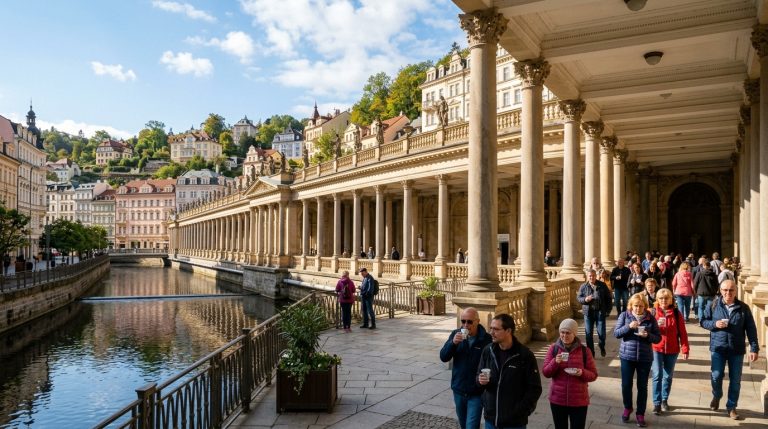
The ultimate day trip guide from Prague to Karlovy Vary. Discover the 5 grand colonnades, thermal drinking etiquette, spa wafers, and the Becherovka museum.

Plan a perfect day trip to Český Krumlov from Prague. Compare RegioJet buses vs trains, tour the Renaissance Castle and Cloak Bridge, and find authentic dining.

The ultimate insider guide to Budapest’s ruin bars in District VII. Discover Szimpla Kert, Instant-Fogas, secret courtyards, signature drinks, and nightlife safety.

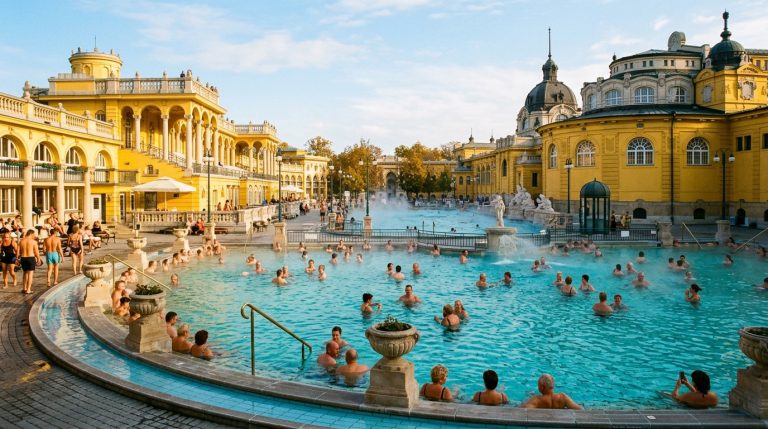
Compare Budapest’s top thermal baths: Széchenyi, Gellért, and Rudas. Explore mineral pool temperatures, architecture, ticket costs, etiquette, and packing tips.

Comprehensive visitor guide to Schönbrunn Palace in Vienna. Compare Imperial vs Grand Tour tickets, palace gardens, Gloriette hilltop views, and transit tips.

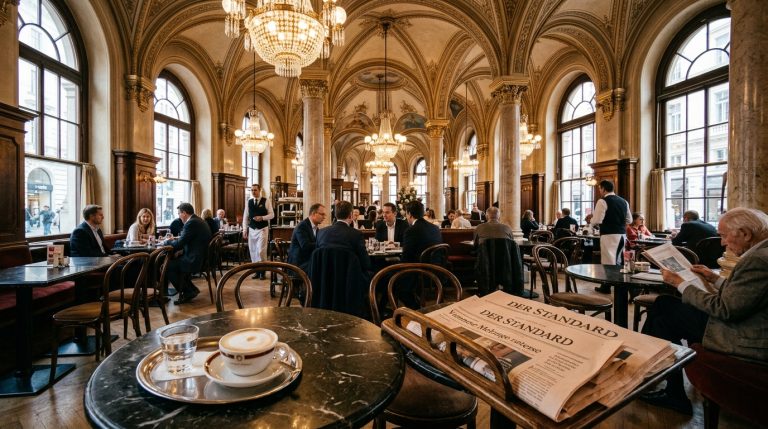
Discover Viennese coffeehouse culture (Kaffeehauskultur). Learn classic ordering etiquette, the silver tray ritual, coffee specialties, and the best historic cafes.

Master money and payments across Prague, Vienna, Bratislava, and Budapest. Learn how to handle CZK, HUF, and EUR without ATM fees and dynamic currency traps.

Essential guide for the EuroCity Metropolitan train from Bratislava to Budapest. Explore timetables, Danube Bend views, dining car menus, and station transfers.

Comprehensive rail guide for trains between Vienna and Bratislava. Discover Regional Express schedules, tickets, stations, and the Bratislava-Ticket pass.

Complete passenger guide for the Twin City Liner catamaran boat between Vienna and Bratislava. Covers schedules, fares, city center piers, and baggage rules.

Complete Slovakia travel costs and Euro currency guide. Learn daily budgets for Bratislava and the Tatras, card acceptance, tipping etiquette, and ATM tips.

Beginner hiking guide to Slovakia’s High Tatras. Discover the best scenic trails around Štrbské Pleso, Popradské Pleso, mountain hut culture, and essential safety.

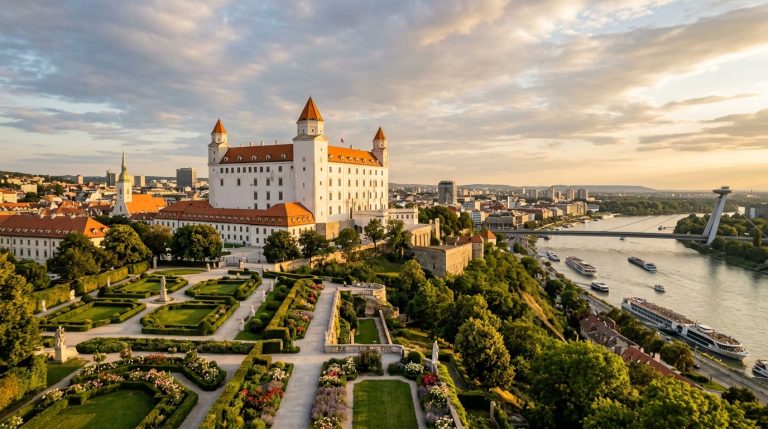
Comprehensive visitor guide to Bratislava Castle (Bratislavský hrad). Discover ticket prices, museum collections, Baroque gardens, viewpoints, and walking routes.

Complete 24-hour walking tour itinerary for Bratislava, Slovakia. Discover Old Town landmarks, Bratislava Castle, Michael’s Gate, authentic Slovak food, and transit connections.

The Czech alphabet consists of 42 standardized letters derived from the Latin script, distinguished by unique diacritical marks including the háček (caron), čárka (acute accent), and kroužek (ring). Operating on an almost purely phonetic principle where every character represents a consistent vocal sound, the Czech alphabet includes distinct letters such as Ř, Š, Č, Ž,…

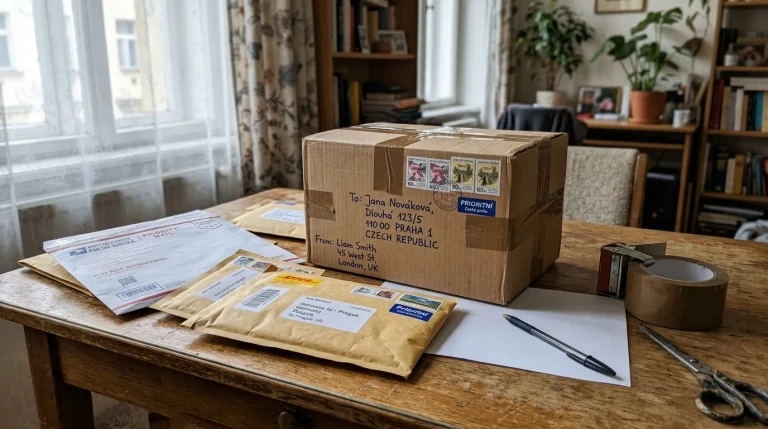
Postage to Czech Republic requires international mail or parcel services complying with European Union customs regulations, standardized 5-digit Czech postal codes, and IOSS electronic declarations. Transit costs range from $1.65–$3.50 for standard letters up to $45–$180 for express package delivery depending on origin, courier carrier, package weight, and delivery speed, with delivery completed domestically by…

Czechia is a landlocked sovereign nation located in the geographical center of Central Europe, officially designated as the Czech Republic. Enclosed by Germany, Poland, Slovakia, and Austria, Czechia spans an area of 78,871 square kilometers across three historical Crown Lands: Bohemia, Moravia, and Czech Silesia. Its capital and largest urban metropolis is Prague, and the…

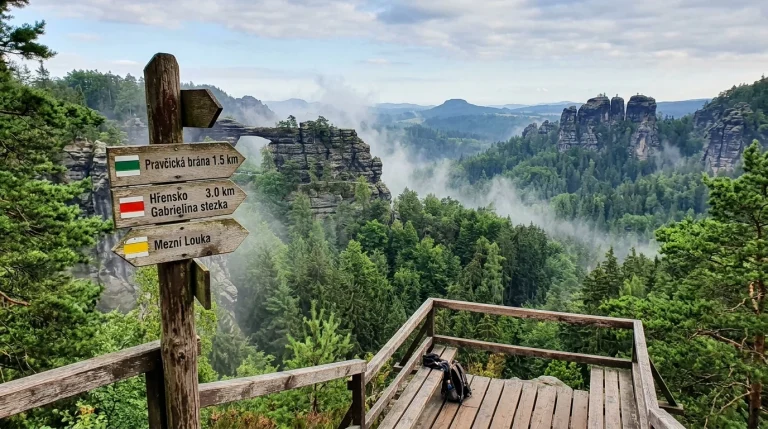
The Czech border region (Tschechien Grenzgebiet): Encompassing the mountainous frontier encircling Bohemia and Moravia along the borders of Germany (Saxony, Bavaria), Austria, Poland, and Slovakia, the Czech borderlands represent one of Central Europe’s most captivating travel corridors. Featuring dramatic national parks such as Bohemian Switzerland (České Švýcarsko), the Ore Mountains (Krušné hory), and the Šumava…

What language was spoken in Czechoslovakia: There was never a single spoken language known as “Czechoslovakian.” Throughout the existence of Czechoslovakia from October 1918 until its peaceful dissolution on December 31, 1992, the country was officially and culturally bilingual, powered by two distinct, highly mutually intelligible West Slavic languages: Czech (čeština) and Slovak (slovenčina). Both…