Day Trip to Český Krumlov from Prague: Castle, Shuttles & One-Day Itinerary
Plan a perfect day trip to Český Krumlov from Prague. Compare RegioJet buses vs trains, tour the Renaissance Castle and Cloak Bridge, and find authentic dining.
Austrian Practical Tips is the comprehensive practical advisory handbook for visitors to Austria, providing essential guidance on Austrian Federal Railways (ÖBB) booking, digital motorway vignette requirements (Asfinag), Viennese coffeehouse social codes, and payment practices.
Essential foundational itinerary and route advice for exploring Austrian Practical Tips.
Detailed travel logistics, distance analysis, and comfortable transport options.
Navigational advice, scheduling tips, and on-the-ground recommendations.
Key landmarks, historical background, and cultural highlights across the destination.
Austria stands at the logistical and cultural heart of Central Europe, boasting one of the world’s most impeccably maintained and punctual public transport systems. Whether you are traveling between the imperial avenues of Vienna, the baroque squares of Salzburg, or the alpine valleys of Tyrol, navigating Austria is clean, secure, and highly predictable. However, understanding country-specific regulations—from electronic motorway toll compliance to traditional culinary and tipping codes—is vital to avoid administrative penalties and enjoy an authentic experience.
For travelers driving personal or rental cars on Austrian motorways (Autobahn) and expressways (Schnellstraße), a valid vignette (toll sticker) is legally mandatory. The Austrian highway authority (ASFINAG) offers both traditional physical adhesive vignettes (available at gas stations and border crossings) and 100% digital vignettes linked to vehicle license plates (purchasable online via asfinag.at). In addition to the standard vignette, certain alpine tunnels and high-mountain motorways (such as the Brenner Pass and Tauern Motorway) require an additional digital sectional toll (Streckenmaut). Failure to have a valid vignette before entering a motorway results in heavy automated camera fines.
For public transport, the Austrian Federal Railways (ÖBB – Österreichische Bundesbahnen) and private competitor Westbahn provide state-of-the-art high-speed rail services. The flagship ÖBB Railjet trains connect Vienna Airport, Vienna Hauptbahnhof, Linz, Salzburg, and Innsbruck with high frequencies, onboard Wi-Fi, restaurant cars, and power outlets. Booking tickets in advance via the ÖBB app unlocks discounted ‘Sparschiene’ fares. In Austrian hospitality, tipping (Trinkgeld) is customary: rounding up the bill by approximately 5% to 10% is standard practice in restaurants and traditional cafes.
| Subject | Official Requirement / Practice | Traveler Recommendation | Key Authority / App |
|---|---|---|---|
| Motorway Tolls | Mandatory Vignette (1-day, 10-day, 2-month, 1-year) | Buy digital vignette on asfinag.at or physical sticker at border gas stations | ASFINAG Official Portal |
| Train Travel | ÖBB National Rail Network & Westbahn | Download ÖBB app for easy ticketing and seat reservations on Railjet | ÖBB App / oebb.at / Westbahn.at |
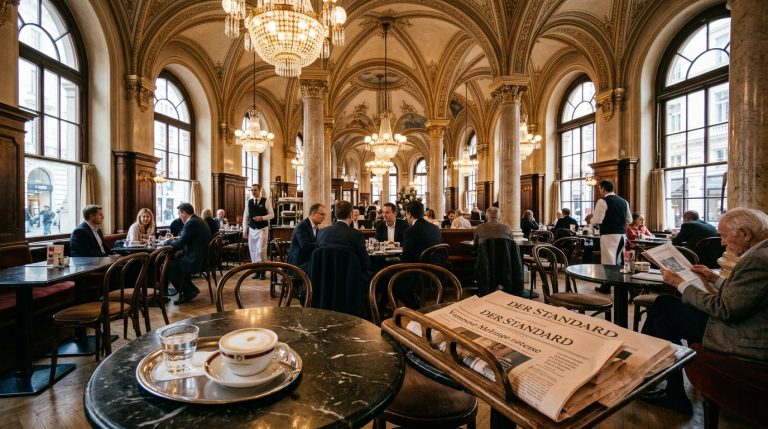
| Coffeehouse Etiquette | Traditional coffee service on silver tray with water glass | Order specific coffees: Melange, Einspänner, or Kleiner Brauner | Historic Viennese Coffeehouse Culture |
| Currency & Cards | Euro (EUR); Contactless widely accepted | Always carry cash (20–50 EUR); some traditional cafes are cash-only | Major bank ATMs (Bank Austria, Erste Bank) |
| Sunday Trading Laws | Shops and supermarkets strictly closed on Sundays | Stock up on groceries on Saturday; station supermarkets remain open | Billa Corso at Wien Praterstern / Hbf |
Yes, all cars driving on Austrian motorways and expressways must have a valid vignette. You can purchase a 1-day, 10-day, or 2-month digital vignette online at asfinag.at, or purchase a physical toll sticker at petrol stations before reaching the Austrian border.
In traditional Austrian cafes, simply asking for ‘a coffee’ is considered vague. Instead, order a specific preparation, such as a Wiener Melange (espresso with steamed milk and foam), an Einspänner (strong black coffee served in a glass topped with whipped cream), or a Verlängerter (espresso diluted with hot water).
While credit and debit cards (Visa, Mastercard, Maestro) and contactless phone payments are accepted in most hotels, major restaurants, and supermarkets, many traditional taverns (Heurige), bakeries, and historic coffeehouses still require cash. Always carry some cash.

Plan a perfect day trip to Český Krumlov from Prague. Compare RegioJet buses vs trains, tour the Renaissance Castle and Cloak Bridge, and find authentic dining.

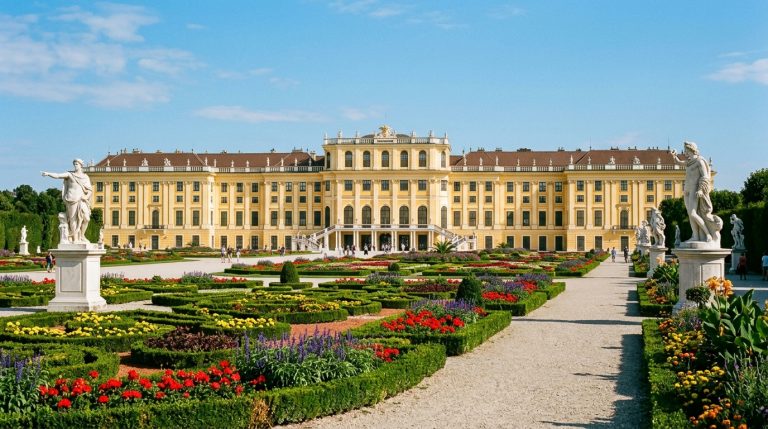
Comprehensive visitor guide to Schönbrunn Palace in Vienna. Compare Imperial vs Grand Tour tickets, palace gardens, Gloriette hilltop views, and transit tips.

Discover Viennese coffeehouse culture (Kaffeehauskultur). Learn classic ordering etiquette, the silver tray ritual, coffee specialties, and the best historic cafes.

Master money and payments across Prague, Vienna, Bratislava, and Budapest. Learn how to handle CZK, HUF, and EUR without ATM fees and dynamic currency traps.

Comprehensive rail guide for trains between Vienna and Bratislava. Discover Regional Express schedules, tickets, stations, and the Bratislava-Ticket pass.

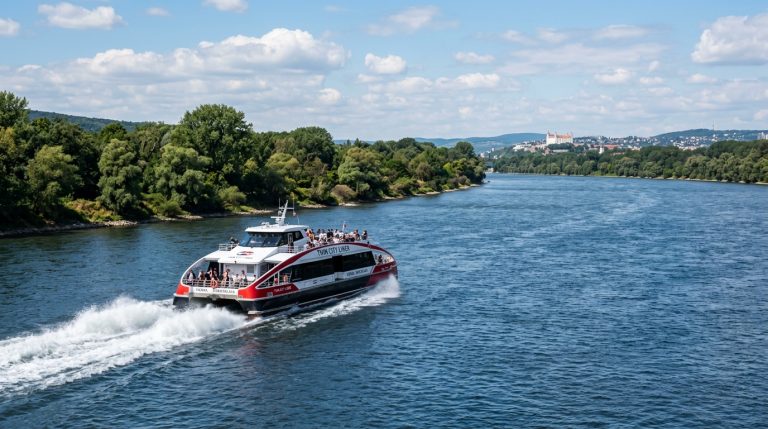
Complete passenger guide for the Twin City Liner catamaran boat between Vienna and Bratislava. Covers schedules, fares, city center piers, and baggage rules.

Complete Slovakia travel costs and Euro currency guide. Learn daily budgets for Bratislava and the Tatras, card acceptance, tipping etiquette, and ATM tips.

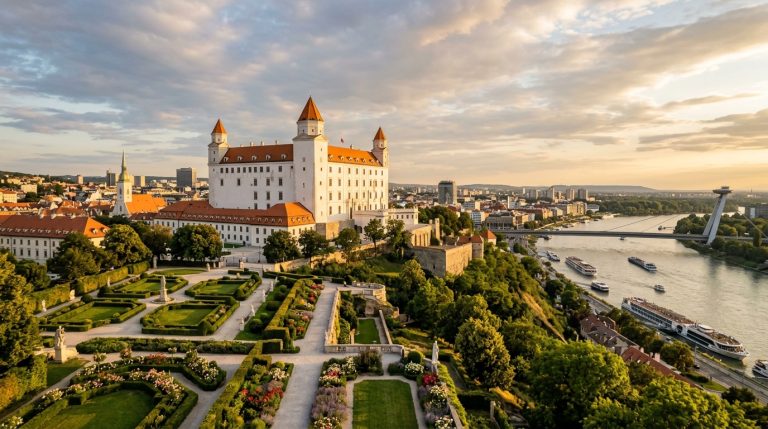
Comprehensive visitor guide to Bratislava Castle (Bratislavský hrad). Discover ticket prices, museum collections, Baroque gardens, viewpoints, and walking routes.

Complete 24-hour walking tour itinerary for Bratislava, Slovakia. Discover Old Town landmarks, Bratislava Castle, Michael’s Gate, authentic Slovak food, and transit connections.

✨ This article was AI edited. Editorial responsibility: Magazine of Travel. Czechia is a landlocked sovereign nation located in the geographical center of Central Europe, officially designated as the Czech Republic. Enclosed by Germany, Poland, Slovakia, and Austria, Czechia spans an area of 78,871 square kilometers across three historical Crown Lands: Bohemia, Moravia, and Czech…

Prague and Austria may seem close on the map, but there’s more to consider than mere distance. Approximately 322 kilometers apart, the journey between these two European destinations can be easily covered by train, bus, or car. With efficient transportation networks and border crossings, exploring the cultural gems of Prague and Austria has never been more accessible. Whether you’re captivated by Prague’s historical charm or Austria’s Alpine beauty, this European journey promises unforgettable experiences.

Prague is not in Austria. Located in the heart of Europe, Prague is the capital of the Czech Republic. Often mistaken due to their proximity, Prague boasts a rich history, stunning architecture, and vibrant culture distinct from its neighboring country. It’s important to clarify this geographical fact to avoid any confusion for travelers.

Salzburg and Prague, two enchanting European cities, are separated by a distance of approximately 380 kilometers. Traveling from Salzburg to Prague provides an exceptional opportunity to explore the beautiful Austrian countryside. With various transport options such as trains or buses, this journey can be covered in around four to five hours. Discover the stunning landscapes, cultural treasures, and vibrant history that await you as you embark on this remarkable adventure through Austria.

Austria and Prague are two breathtaking European destinations that should be on every traveler’s bucket list. Located about 300 kilometers apart, the journey from Austria to Prague generally takes around 4-5 hours by train or car. Whether you’re exploring the majestic Alps in Austria or admiring Prague’s historic charm, both countries offer unique experiences that will leave you in awe. So pack your bags and get ready for an unforgettable adventure through the heart of Europe!

If you’re planning a European journey, Prague and Vienna are two must-visit destinations. Prague, the capital of Czechia, lies about 300 kilometers northwest of Vienna, Austria’s capital. The distance between these beautiful cities can be covered in multiple ways, including by train, bus, or car. Regardless of the mode of transport, exploring the fascinating history, stunning architecture, and vibrant culture of both Prague and Vienna will surely make your journey unforgettable.