
Budapest Ruin Bars Guide: History, Best Locations & Nightlife Etiquette
The ultimate insider guide to Budapest’s ruin bars in District VII. Discover Szimpla Kert, Instant-Fogas, secret courtyards, signature drinks, and nightlife safety.
Hungary (Magyarország) is a Central European nation situated in the Pannonian Basin and bisected by the Danube River, distinguished by its unique Finno-Ugric cultural identity, world-renowned natural thermal spa traditions, and grand architectural heritage centered upon its capital, Budapest.
Comparing medicinal hot spring mineral compositions, Ottoman domes, outdoor wave pools, and bathing etiquette.
Exploring District VII’s historic Jewish Quarter, art courtyards, Szimpla Kert, and evening nightlife etiquette.
Direct Metropolitan train route following the Danube river bend into Budapest Nyugati station.
Budgeting in Hungarian Forints, card acceptance, and avoiding dynamic conversion at Hungarian ATMs.
Hungary occupies the central Carpathian basin, defined by the northward-to-southward transit of the Danube (Duna) and Tisza rivers. Geologically, Hungary sits atop one of the earth’s thinnest continental crusts, creating an abundance of natural geothermal springs that have shaped local culture for over two millennia—beginning with Roman settlements at Aquincum, expanding under 16th-century Ottoman Turkish rule, and culminating in the grand Fin-de-Siècle spa palaces of the late Austro-Hungarian Empire.
Hungary is a member of the European Union and the Schengen Area, but retains its sovereign currency, the Hungarian Forint (HUF). Due to currency denomination scale, travelers must exercise attentiveness with paper banknotes (ranging from 500 to 20,000 Forints) and verify that point-of-sale card readers process transactions in HUF rather than home currencies.
Railway transit is managed by Hungarian State Railways (MÁV-START), operating out of three primary Budapest termini: Keleti (Eastern), Nyugati (Western), and Déli (Southern). International EuroCity trains connect Budapest directly with Vienna (under 2.5 hours via Railjet), Bratislava (2 hrs 25 min), and Prague (under 7 hours), providing straightforward overland links.
| Hungarian Region | Primary Centers | Signature Highlights | Regional Flavors & Gastronomy |
|---|---|---|---|
| Budapest Metropolitan | Buda & Pest districts | Parliament, Fisherman’s Bastion, Széchenyi Baths, Ruin Bars | Gulyásleves (goulash), lángos, chimney cake (kürtőskalács) |
| Danube Bend (Dunakanyar) | Szentendre, Visegrád, Esztergom | Medieval citadel ramparts, Esztergom Basilica, artists’ colony | Halászlé (fishermen’s soup), river trout |
| Lake Balaton | Siófok, Balatonfüred, Tihany | Central Europe’s largest freshwater lake, sailing, volcanic hills | Badacsony volcanic white wines (Olaszrizling) |
| Tokaj Wine Region | Tokaj, Mád, Sárospatak | UNESCO historic wine cellars, sweet botrytized Aszú wines | Tokaji Aszú, Furmint wine pairings |
Hungary uses the Hungarian Forint (HUF). While select international hotels and restaurants in central Budapest accept Euros, exchange rates are unfavorable with change returned in Forints. Paying by card in HUF is strongly advised.
Bring a swimsuit, flip-flops or slippers (mandatory on wet floors), and a towel. A swimming cap is required if utilizing lane swimming pools (such as the main pool at Széchenyi or Gellért), though thermal soaking pools do not require caps.

The ultimate insider guide to Budapest’s ruin bars in District VII. Discover Szimpla Kert, Instant-Fogas, secret courtyards, signature drinks, and nightlife safety.
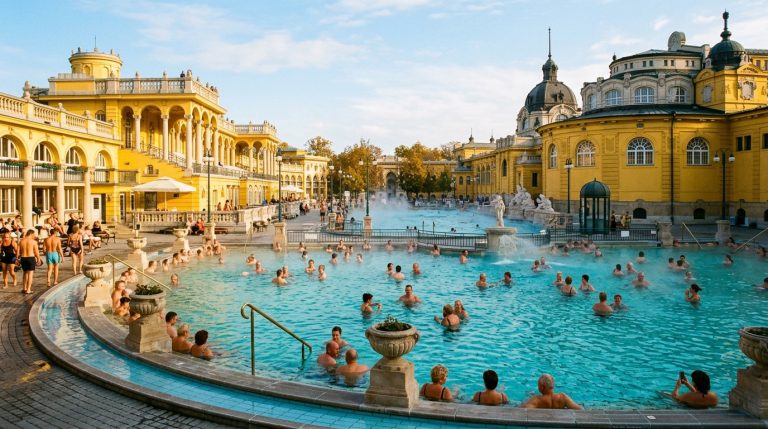
Compare Budapest’s top thermal baths: Széchenyi, Gellért, and Rudas. Explore mineral pool temperatures, architecture, ticket costs, etiquette, and packing tips.

When it comes to choosing between Budapest and Prague, travelers often find themselves in a delightful dilemma. Both cities offer rich history, stunning architecture, and vibrant culture. However, it ultimately boils down to personal preferences. Prague enchants with its fairytale-like charm, while Budapest impresses with its grandeur and thermal baths. Whether you prefer a romantic stroll in Prague’s old town or a relaxing spa experience in Budapest, the choice is yours to make. Rest assured, whichever city you choose, you’re in for an unforgettable experience.

The train journey from Budapest to Prague offers a scenic and convenient way to travel between these two stunning cities. Covering a distance of approximately 523 kilometers, the trip takes around 6-7 hours, depending on the train type and stops. Sit back, relax, and enjoy the breathtaking views as you embark on this memorable adventure through Central Europe.

If you’re planning a trip from Prague to Budapest and wondering about train travel options, you’re in luck! There is indeed a train service connecting these two stunning European cities. The journey takes approximately six to seven hours, offering picturesque views along the way. With multiple daily departures, you can easily find a convenient time to embark on this scenic adventure. So sit back, relax, and get ready to explore the beautiful countryside as you make your way from Prague to Budapest by train.
Are you planning a trip to Budapest, Vienna, and Prague? Wondering how many days to spend in each city? Read on for a travel itinerary that will help you make the most of your time in these beautiful European destinations. Explore the rich history, stunning architecture, and vibrant culture of these cities at your own pace.

With their rich history and vibrant culture, Prague and Budapest are both mesmerizing European destinations. While Prague boasts stunning architecture and a fairy-tale-like atmosphere, Budapest entices with its thermal baths and lively nightlife. Choosing between the two is no easy task, but this article aims to delve into the intricacies of these cities, helping you make an informed decision based on your preferences. Whether it’s exploring Prague’s medieval wonders or indulging in Budapest’s unique charm, this city face-off has got you covered!

Budapest and Prague, two stunning European capitals, are undoubtedly popular tourist destinations. But how close are they to each other? This article aims to shed light on the geographical proximity between Budapest and Prague, unraveling the distance, travel options, and best routes for those planning an exciting intercity adventure in Central Europe. Hold onto your seats as we unveil the truth behind the Budapest-Prague connection!

When planning a trip to Eastern Europe, the age-old debate of Prague vs. Budapest often comes up. Both cities have their own unique charm and are worth a visit. Prague boasts stunning architecture and a rich history, while Budapest offers a more vibrant nightlife and thermal baths. Ultimately, the decision depends on personal preferences and interests.
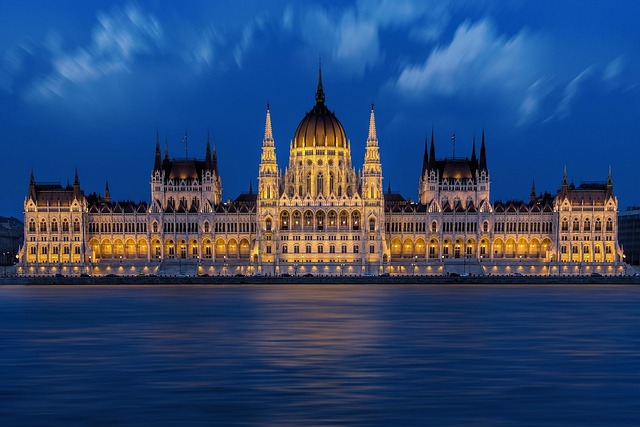
If you’re planning a trip to Eastern Europe, chances are you’ve come across the captivating cities of Prague and Budapest. Both brimming with rich history, stunning architecture, and vibrant cultures, it’s no wonder that travelers find themselves torn between these two remarkable destinations. In this article, we will delve into a city comparison, shedding light…

Planning a trip from Prague to Budapest? Wondering about the distance? Well, you’re in luck! In this article, we’ll provide you with some European travel tips, including the distance between these two vibrant cities. Stay tuned and get ready to embark on an unforgettable adventure across Central Europe!

Budapest and Prague are two magnificent European cities that offer a wealth of historical and cultural experiences. But when it comes to budget travel, which one is more affordable? By analyzing factors such as accommodation, meals, attractions, and transportation, we aim to provide a clear comparison to help you decide which destination suits your wallet better.

Are you torn between visiting Prague or Budapest? These two Eastern European gems have their own unique charm and allure. Prague boasts fairytale-like architecture and a rich history, while Budapest showcases its thermal baths and vibrant nightlife. Ultimately, the choice depends on your preferences – whether you seek romance and history in Prague or a dynamic and lively atmosphere in Budapest.

Prague and Budapest, two stunning European cities, are well-connected by various modes of transportation. For a scenic journey, opt for a train ride that takes approximately 7-8 hours, offering picturesque countryside views. Alternatively, a direct flight takes around 1 hour, ensuring a quick and convenient transfer. Buses are another budget-friendly option, with a travel time of approximately 7-9 hours. Whichever mode you choose, prepare to immerse yourself in captivating history and culture as you embark on this unforgettable journey between Prague and Budapest.

Are you planning a trip from Budapest to Prague? This traveler’s guide will provide you with all the essential information you need. From the distance between the two cities, to the various transportation options available, we’ve got you covered. Keep reading to discover the best routes and tips for a seamless journey.