What Language Was Spoken in Czechoslovakia? Czech vs Slovak Guide | Magazine of Travel
✨ This article was AI edited. Editorial responsibility: Magazine of Travel.
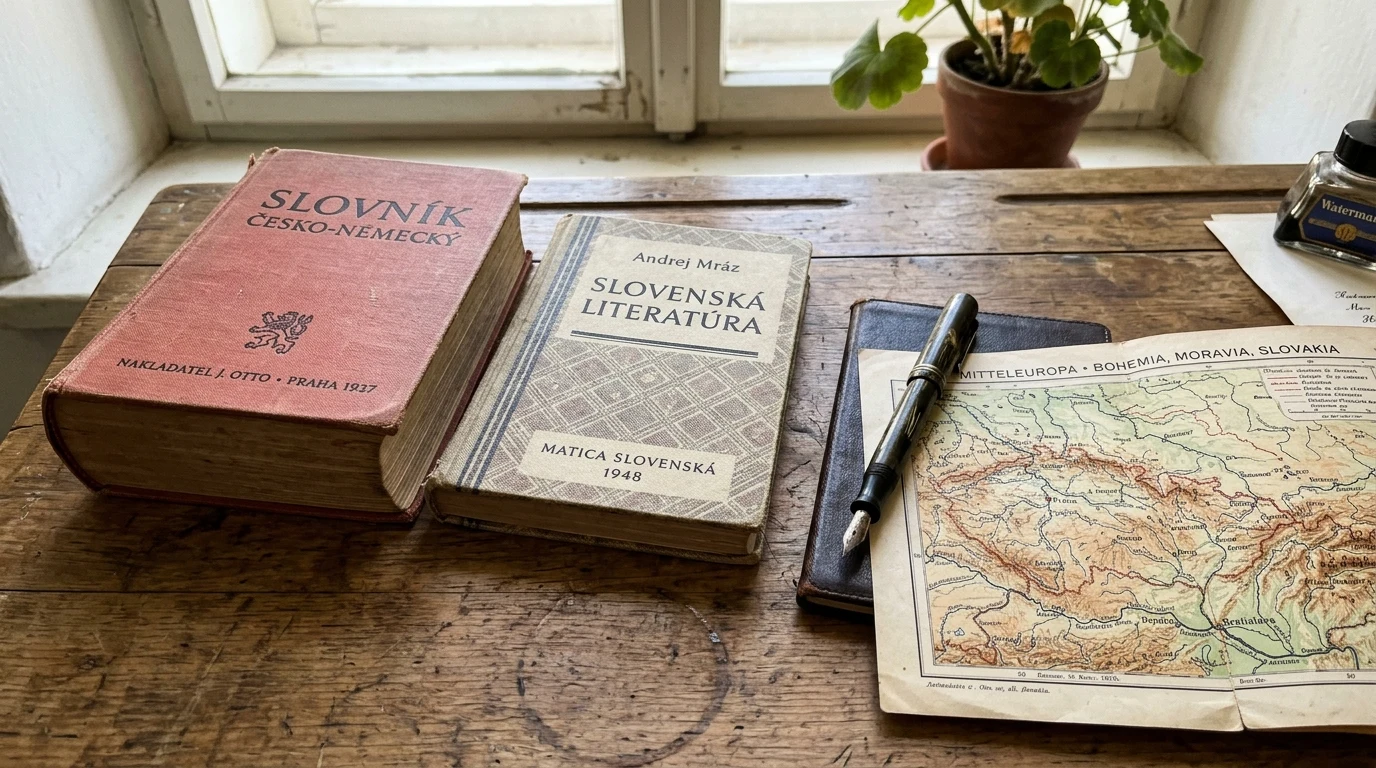
What language was spoken in Czechoslovakia: There was never a single spoken language known as “Czechoslovakian.” Throughout the existence of Czechoslovakia from October 1918 until its peaceful dissolution on December 31, 1992, the country was officially and culturally bilingual, powered by two distinct, highly mutually intelligible West Slavic languages: Czech (čeština) and Slovak (slovenčina). Both held co-equal legal status across state institutions, military command, diplomatic missions, and national public media.
The Origin of the Myth: Did a “Czechoslovak” Language Ever Exist?
One of the most persistent historical misconceptions encountered by travelers, students of European history, and international observers is asking what language is spoken in Czechoslovakia under the assumption that a singular, hybridized “Czechoslovak” language existed. While everyday citizens never spoke a consolidated composite tongue, the concept of a single “Czechoslovak language” did, in fact, exist as an artificial legal and political fiction during the interwar First Czechoslovak Republic (1918–1938).
Following the collapse of the Austro-Hungarian Empire in the aftermath of World War I, Tomáš Garrigue Masaryk, Edvard Beneš, and Milan Rastislav Štefánik established the democratic state of Czechoslovakia. However, the fledgling nation faced a profound demographic vulnerability: ethnic Germans within the Bohemian and Moravian borderlands (Sudetenland) numbered over three million—far outnumbering the approximately two million Slovaks residing in the eastern territory. To secure diplomatic recognition at the Paris Peace Conference and demonstrate that the Slavic majority constituted an overwhelming two-thirds majority of the total population, the Czechoslovak Constitution of February 29, 1920 (specifically Act No. 122/1920 Sb.) officially established the “Czechoslovak language” (jazyk československý) as the sole state language, defining Czech and Slovak as merely two regional literary variants of that unitary tongue.
In linguistic and practical terms, however, Czechs continued speaking and writing literary Czech, while Slovaks continued speaking and writing literary Slovak. In 1945, with the postwar expulsion of the German minority and the dawn of the Third Republic, the legal fiction of a “Czechoslovak language” was permanently discarded in favor of explicit constitutional parity between Czech and Slovak as two independent sister tongues.
| Historical Period | Constitutional Status | Dominant Working Languages | Recognized Minority Tongues |
|---|---|---|---|
| First Republic (1918–1938) | Unitary “Czechoslovak Language” (Constitutional fiction) | Czech (Western lands), Slovak (Eastern lands) | German (23%), Hungarian (5.5%), Rusyn, Yiddish, Polish |
| Communist Era (1948–1968) | Equal national languages under central Prague administration | Czech and Slovak (de facto parity, Czech administrative tilt) | Hungarian, Ukrainian/Rusyn, Polish, German |
| Czechoslovak Federation (1969–1992) | Full constitutional equality within dual federal republics | Czech (Czech Socialist Republic), Slovak (Slovak Socialist Republic) | Hungarian, Polish, Ukrainian, Romani |
| Post-1993 Velvet Divorce | Two sovereign states: Czech Republic & Slovakia | Czech (Czechia), Slovak (Slovakia) | Mutual understanding preserved via cultural treaty provisions |
Czech vs. Slovak: Similarities, Differences, and Mutual Intelligibility
Czech and Slovak belong to the West Slavic branch of the Indo-European language family, sharing immediate genetic kinship with Polish and Sorbian (spoken in eastern Germany). Because the two languages diverged relatively recently in linguistic history, they exhibit an astonishingly high degree of mutual intelligibility—estimated by comparative linguists to hover between 90% and 95% in standard registers.
A native Czech speaker speaking Czech and a native Slovak speaker speaking Slovak can carry on an in-depth conversation on technical, philosophical, or everyday topics, each utilizing their respective native tongue without needing an interpreter. However, the languages possess distinct phonological, morphological, and lexical attributes that clearly distinguish them.
1. Phonology and Pronunciation Nuances
- The Infamous Czech “Ř” (ř / Ř): Unique in world phonology, Czech possesses the raised alveolar trill-fricative consonant sound denoted by the letter ř (as heard in Dvořák, Praha, or moře). This sound is notoriously difficult for non-native learners and does not exist in the Slovak language. In Slovak, cognate words use standard r or soft consonant pairings (e.g., Czech řeka vs. Slovak rieka, meaning “river”).
- Slovak Diphthongs: Slovak makes rich and melodic use of closing diphthongs denoted by letters such as ô (pronounced approximately like “wuo” or “wo”), ia, ie, and iu (e.g., Slovak stôl vs. Czech stůl, meaning “table”; Slovak kôň vs. Czech kůň, meaning “horse”).
- Vowel Quantities and Rhythmic Law: Slovak adheres strictly to a phonological constraint known as the “Rhythmic Law” (rytmický zákon), which dictates that two long syllables cannot immediately follow one another in a single word. If a grammatical suffix introduces a long vowel after an already long root syllable, the suffix vowel automatically shortens. Czech features no such limitation and frequently strings long vowels consecutively (e.g., Czech krásný vs. Slovak krásny).
- Palatalization: Slovak features an additional set of soft consonant letters not found in Czech, such as ľ (soft l) and ŕ (long syllabic r), lending Slovak speech a softer, more melodic cadence compared to the sharper, percussive cadence of Czech.
2. Vocabulary and “False Friends”
While the vast majority of grammatical roots are identical, centuries of differing historical influences produced divergent lexical developments. Bohemia and Moravia fell under direct Habsburg administration with heavy German linguistic contact, while Slovakia was part of the Kingdom of Hungary (Upper Hungary) for nearly a millennium, assimilating Hungarian and distinct East Slavic loanwords.
| English Meaning | Czech Word | Slovak Word | Linguistic Context |
|---|---|---|---|
| January | leden | január | Czech retains Slavic nature-roots; Slovak adopted Latin month names |
| Cat | kočka | mačka | Distinct Slavic animal designations |
| Speak / Talk | mluvit | hovoriť | Both understood reciprocally, but preferred verbs diverge |
| Camel | velbloud | ťava | Completely divergent etymological sources |
| Farewell / Goodbye | na shledanou | dovidenia | Czech emphasizes visual reunion; Slovak parallels German “Auf Wiedersehen” |
| Boil / Cook | vařit | variť | Identical root with minor orthographical shift |
| Pencil | tužka | ceruzka | Slovak borrowed from German/Latin cerussa (white lead); Czech from tuha (graphite) |
Language in Everyday Czechoslovak Life (1918–1992)
In daily life across twentieth-century Czechoslovakia, the relationship between Czech and Slovak was characterized by effortless passive bilingualism. The state-run media architecture played a decisive role in ensuring that every citizen—whether living in western Pilsen or eastern Košice—grew up completely fluent in comprehending both languages.
Bilingual National Television and Radio
During the communist era (1948–1989), Czechoslovak Television (Československá televize – ČST) operated nationwide broadcasting. The flagship evening news broadcast, Televizní noviny, featured an alternating dual-anchor presentation: one news presenter spoke flawless Czech, while the co-anchor delivered the subsequent news segment in standard Slovak. Popular children’s bedtime animated shows (Večerníček), broadcast every evening across the republic, alternated language editions on a daily or weekly schedule.
As a natural consequence, children who grew up during the federation possessed an innate, subconscious ability to understand both Czech and Slovak without ever requiring formal classroom instruction in their sister language.
The Czechoslovak People’s Army (ČSLA)
Mandatory two-year military conscription was a universal rite of passage for young Czechoslovak men. Regiments were deliberately mixed, stationing Czech conscripts in Slovak garrison towns and Slovak recruits across Bohemia and Moravia. Military manuals, technical orders, and command protocols were produced in parallel in both languages, ensuring that working-class youth from both republics collaborated seamlessly in a shared bilingual operational framework.
Minority Languages in Czechoslovakia
Beyond Czech and Slovak, historical Czechoslovakia was an exceptionally multilingual nation reflecting the complex ethnic mosaic of Central Europe:
- German: Prior to 1945, German was the second most widely spoken native tongue in the country, spoken by over 23% of the populace. Historic figures like Franz Kafka, Rainer Maria Rilke, and Max Brod were part of Prague’s vibrant German-speaking cultural sphere. Following the postwar Beneš decrees and the mass expulsion of approximately 2.9 million Sudeten Germans, the German language dramatically diminished in public use.
- Hungarian (magyar): Concentrated predominantly along the southern border belt of Slovakia (surrounding towns like Komárno, Dunajská Streda, and Nové Zámky), Hungarian continues to be spoken natively by approximately 450,000 citizens in modern Slovakia, supported by minority language schools and signage.
- Rusyn and Ukrainian: Native to the easternmost region of Carpathian Ruthenia (Podkarpatská Rus), which formed an autonomous province of Czechoslovakia between 1919 and 1939 before being annexed by the Soviet Union into the Ukrainian SSR in 1945.
- Romani: Spoken by the Romani communities settled across Moravia and eastern Slovakia, primarily in dialectal variants of the North-Central Romani branch.
- Yiddish: Widely spoken among the country’s pre-war Jewish population of nearly 350,000, particularly in urban centers and Carpathian market towns, prior to the tragic devastation of the Holocaust.
The 1993 Velvet Divorce and Modern Language Dynamics
On January 1, 1993, Czechoslovakia dissolved peacefully into two independent sovereign states: the Czech Republic (now officially recognized by its short English name, Czechia) and the Slovak Republic (Slovakia). The split was characterized by extraordinary goodwill and zero violence, earning the moniker “The Velvet Divorce.”
Generational Divide in Language Comprehension
Today, the linguistic dynamic between the two nations presents a fascinating sociolinguistic contrast:
- Slovaks Understanding Czech: Citizens of Slovakia—including younger generations born long after 1993—continue to enjoy near-flawless comprehension of the Czech language. This asymmetry exists because the Czech media market, university system, and publishing industry are significantly larger than Slovakia’s. Many Slovak university students attend Charles University in Prague or Masaryk University in Brno, Czech television channels and book translations are omnipresent in Slovak bookstores, and Czech films are widely watched without dubbing.
- Czechs Understanding Slovak: Among older Czechs who grew up watching Czechoslovak television, Slovak comprehension remains natural and instant. However, among Czech teenagers and young adults raised after 2000 who have had minimal exposure to Slovak television or cultural media, certain Slovak lexical terms (e.g., poľovník for hunter, murár for bricklayer, cencúľ for icicle) are occasionally unfamiliar, sometimes requiring contextual clarification.
Frequently Asked Questions: What Language Was Spoken in Czechoslovakia?
Was there ever a language called Czechoslovakian?
No. “Czechoslovakian” as a distinct linguistic entity never existed in spoken reality. It was a legal construct codified in the 1920 Constitution for political diplomacy. In reality, citizens spoke either standard Czech or standard Slovak, which are two independent West Slavic languages.
Can Czech and Slovak speakers understand each other?
Yes. Mutual intelligibility between standard Czech and standard Slovak is approximately 90% to 95%. Czechs and Slovaks routinely converse with one another, each speaking their own native tongue, without requiring translation or English as a bridge language.
What language is spoken in the Czech Republic today?
The sole official state language of the Czech Republic is Czech (čeština), an inflected Slavic language written in the Latin alphabet supplemented with diacritical marks (háčky and čárky). English and German are widely spoken as foreign languages in tourism, higher education, and international commerce.
Is Russian widely understood or spoken in Prague?
While older Czechs who attended school prior to the 1989 Velvet Revolution were subjected to mandatory Russian language education during the Soviet bloc era, Russian is not a native language of the country and is generally not preferred in daily interactions. Younger Czechs overwhelmingly learn English and German as foreign languages.
Získejte naše nejnovější články, návody a tipy přednostně ve vyhledávání Google a v AI přehledech.