
Budapest Thermal Baths Guide: Széchenyi vs Gellért vs Rudas Compared
✨ This article was AI edited. Editorial responsibility: Magazine of Travel.
Resting atop a geological fault line that releases over 70 million liters of mineral-rich thermal water daily across 123 natural springs, Budapest is rightfully celebrated as the “City of Spas.” Bathing here is not a modern tourist gimmick—it is a 2,000-year-old living tradition spanning Roman legionary baths, 16th-century Ottoman Turkish dome baths, and opulent 19th-century Austro-Hungarian palace complexes. This comparative guide contrasts Budapest’s top three thermal baths to help you choose the right spa for your journey.
Comparative Matrix: Széchenyi vs Gellért vs Rudas
| Thermal Bath | Architectural Style | Pool Count | Weekday Price (Locker) | Best Suited For |
|---|---|---|---|---|
| Széchenyi Baths | Neo-Baroque Palace (1913) | 21 (3 outdoor, 18 indoor) | 10,500 HUF (~€26.50) | First-timers, outdoor pool soaking, social atmosphere |
| Gellért Baths | Art Nouveau Secessionist (1918) | 10 (Indoor thermal & wave pool) | 10,500 HUF (~€26.50) | Architecture lovers, mosaic art, tranquil elegance |
| Rudas Baths | Ottoman Turkish (1550) + Modern Rooftop | 7 (Ottoman dome + rooftop hot tub) | 9,300 HUF (~€23.50) | Authentic Turkish dome, late-night soaking, Danube views |
1. Széchenyi Baths: The Grand Neo-Baroque Wonder
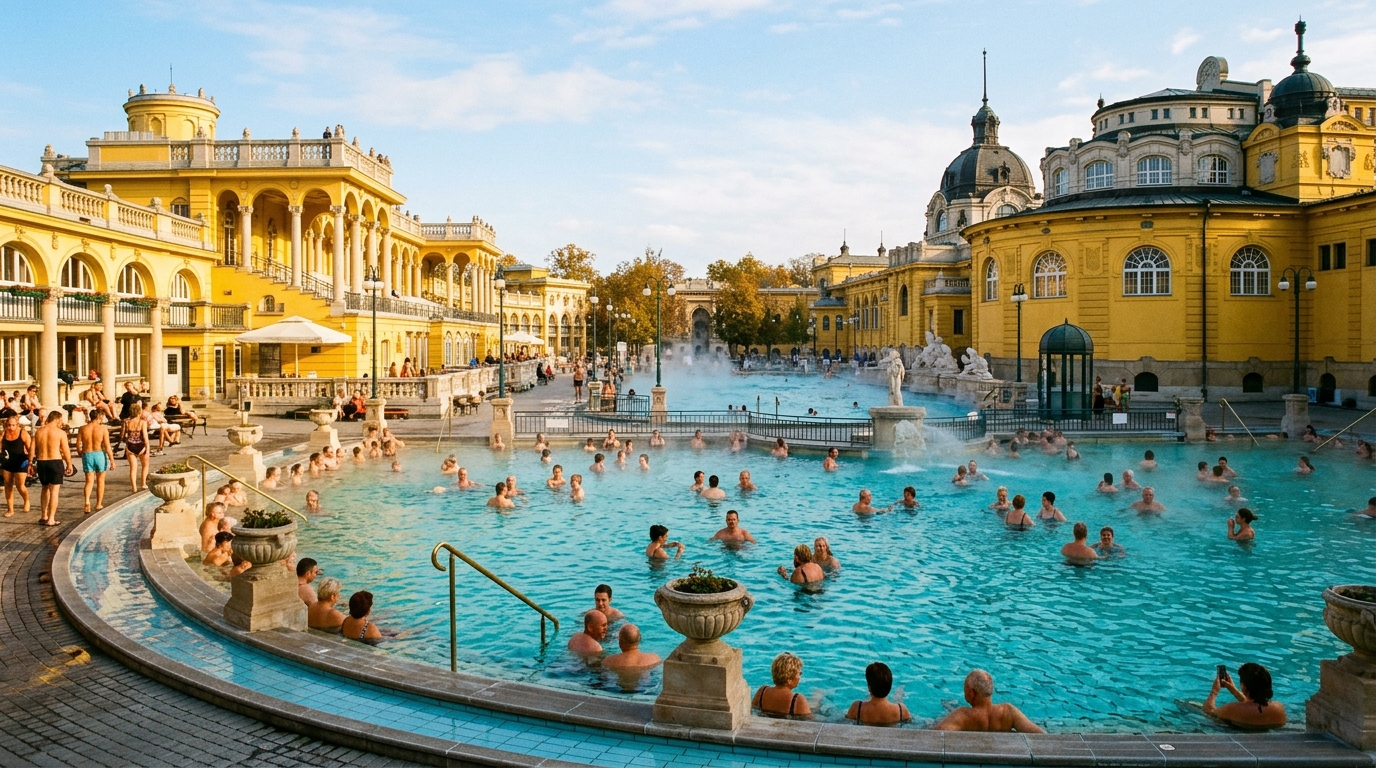
Located in the center of City Park (Városliget), Széchenyi Gyógyfürdő is the largest medicinal bath complex in Europe. Fed by thermal spring waters reaching 77°C from a depth of 1,246 meters, the waters are cooled into pools ranging from 28°C to 40°C.
- The Highlight: The three massive outdoor pools surrounded by canary-yellow Neo-Baroque palace facades. The central pool is an Olympic swimming pool (cap required), while the eastern pool is a hot relaxation thermal bath (38°C) featuring submerged chessboards where Hungarian regulars play daily.
- How to Reach: Take the historic yellow Metro Line M1 (continental Europe’s oldest subway line) directly to the Széchenyi fürdő station.
2. Gellért Baths: The Art Nouveau Masterpiece
Nestled at the base of Gellért Hill on the Buda side of Liberty Bridge, Gellért Gyógyfürdő is an architectural triumph of Hungarian Secessionist design.
- The Highlight: Stepping into Gellért feels like entering a cathedral of water: turquoise Zsolnay ceramic tiles, intricate marble mosaics, soaring glass skylights, and carved stone balconies.
- Outdoor Feature: In summer, Gellért opens its outdoor terrace featuring the world’s first artificial wave pool, inaugurated in 1927.
- How to Reach: Take Metro Line M4 or Tram Lines 47 and 49 to Szent Gellért tér.
3. Rudas Baths: Ottoman Turkish Heritage and Rooftop Views
Built in 1550 during the Ottoman occupation under Pasha Sokollu Mustafa, Rudas Fürdő retains its centuries-old Islamic hammam core.
- The Highlight: An octagonal central thermal pool beneath a 10-meter stone dome supported by eight massive red limestone pillars. Tiny colored glass cupolas puncture the dome, casting jewel-toned beams of sunlight through the steam.
- The Modern Addition: Rudas features a sleek open-air rooftop hot tub overlooking the Danube River and the illuminated bridges of Budapest.
- Gender Schedule Note: Unlike Széchenyi and Gellért (which are 100% co-ed daily), Rudas maintains traditional single-sex bathing days for its historical Turkish hammam section (Men only: Mon, Wed, Thu; Women only: Tue; Co-ed: Fri afternoon, Sat, Sun). The rooftop pool and wellness zones are co-ed every day.
Essential Bathing Etiquette and What to Pack
To ensure a smooth visit, remember these fundamental thermal bath rules:
- What to Bring: Swimsuit (mandatory), flip-flops (mandatory for poolside hygiene), towel, and a waterproof phone pouch if taking photos.
- Swimming Cap Requirement: Caps are required only in lap swimming pools. You do not need a cap in any of the relaxing thermal baths.
- Wristband (Proxy Watch): Upon payment, you receive a silicon RFID wristband. This acts as your electronic key to lock and unlock your assigned changing locker or private wooden cabin.
- Pre-Wash: It is mandatory to take a thorough shower with soap before stepping into any thermal pool.
Currency and Payment Strategies in Budapest
Baths accept all major contactless credit cards. Note that ticket machines and ticket booths bill strictly in Hungarian Forint (HUF). Ensure your card declines Dynamic Currency Conversion to avoid excessive bank markups. Review our comprehensive Central European currency guide for full details.
Frequently Asked Questions About Budapest Thermal Baths
Can you visit Budapest thermal baths in winter?
Yes! Winter is arguably the most magical season to visit Széchenyi Baths. Soaking in the steaming 38°C outdoor water while snow falls on the surrounding yellow Baroque roofs is a signature Budapest experience.
Are the thermal baths clean and sanitary?
Yes. The water in the thermal pools is continuously filtered and replenished by natural artesian mineral springs, and municipal health authorities conduct daily bacteriological laboratory testing.
What is the difference between a locker and a cabin?
A locker is a standard metal locker located in a communal changing room. A cabin (kabin) is a private wooden changing room with a bench where you can change clothes in privacy and leave your belongings locked for the day.
Can children visit the thermal baths?
Children under the age of 14 are generally discouraged from using hot medicinal thermal pools due to high mineral concentrations and cardiovascular load, but they are permitted in outdoor swimming and leisure pools.
How long should you spend at a thermal bath?
Most visitors spend between 2.5 and 4 hours alternating between hot thermal pools, cold plunge tubs, steam rooms, and Finnish dry saunas.
Získejte naše nejnovější články, návody a tipy přednostně ve vyhledávání Google a v AI přehledech.


