Day Trip to Český Krumlov from Prague: Castle, Shuttles & One-Day Itinerary
Plan a perfect day trip to Český Krumlov from Prague. Compare RegioJet buses vs trains, tour the Renaissance Castle and Cloak Bridge, and find authentic dining.
Slovak Travel Practicalities is the essential practical and logistical guide to traveling in Slovakia, providing independent visitors with clear information on Euro currency budgeting, cashless card acceptance, ZSSK national train booking, electronic motorway vignettes, and cultural etiquette.
Essential foundational itinerary and route advice for exploring Slovak Travel Practicalities.
Detailed travel logistics, distance analysis, and comfortable transport options.
Navigational advice, scheduling tips, and on-the-ground recommendations.
Key landmarks, historical background, and cultural highlights across the destination.
Slovakia is one of the most accessible and rewarding destinations in Central Europe, offering a high standard of travel infrastructure combined with exceptionally affordable living and travel costs compared to Western European neighbors. As an active member of the European Union, the Schengen Area, and the Eurozone, traveling through Slovakia is streamlined with zero border checks along EU frontiers and the elimination of currency exchange hassles for Eurozone travelers. Understanding the practical realities of Slovak transport, payment standards, and cultural norms ensures a seamless journey.
The official currency of Slovakia is the Euro (EUR), adopted in 2009. Cashless payments via contactless debit/credit cards, Apple Pay, and Google Pay are ubiquitous in hotels, restaurants, supermarkets, and ticket kiosks across major cities like Bratislava and Košice. However, carrying modest amounts of cash (10 to 50 EUR) is advisable when hiking in the High Tatras or visiting rural villages, where small mountain huts or local craft stalls may operate on cash only. Standard tipping etiquette in sit-down restaurants is around 10% for good service, customarily rounded up when paying.
Getting around Slovakia is straightforward and inexpensive. The state rail operator, Železničná spoločnosť Slovensko (ZSSK), operates a modern intercity rail backbone connecting Bratislava in the west through Žilina, the High Tatras (Poprad), and Košice in the east. Booking online via the ZSSK app or website guarantees seat reservations and clear schedules. For drivers, Slovak motorways (diaľnice) require an electronic highway vignette (eznamka.sk), which must be purchased online prior to entering toll highways. Free Wi-Fi is widely available in cafes and train stations, and standard EU roaming rules apply seamlessly.
| Category | Standard Regulation / Practice | Recommendations for Travelers | Useful Tools / Links |
|---|---|---|---|
| Currency | Euro (EUR) since 2009 | Use contactless cards; avoid non-bank airport exchange kiosks | Bank ATMs (VÚB, Slovenská sporiteľňa, Tatra banka) |
| Highway Tolls | Electronic Motorway Vignette (Eznamka) | Mandatory for all cars on motorways; 10-day, 30-day, or annual pass | Official portal: eznamka.sk |
| Rail Travel | ZSSK National Railway Network | Book IC (InterCity) trains in advance for guaranteed AC and seats | Official portal: zssk.sk / Ideme Vlakom app |
| Tipping Culture | Discretionary 8% – 10% for good table service | Round up total or state amount before card terminal entry | Common in restaurants and cafes; not required in bars |
| Emergency Numbers | Universal European Emergency: 112 | Mountain Rescue Service (Horská záchranná služba): 18 300 | App: HZS Mountain Rescue App (highly recommended) |
Slovakia uses the Euro (EUR), which it adopted on January 1, 2009. Unlike the neighboring Czech Republic which still uses the Czech Crown (CZK), transactions in Slovakia are conducted entirely in Euros.
Yes, if you drive on Slovak motorways (marked with ‘D’ or ‘R’), you must purchase an electronic vignette before entering. Vignettes are digital (linked to your vehicle license plate) and can be purchased online at eznamka.sk for 10 days, 30 days, or one year.
Yes, English is widely spoken in Bratislava, Košice, the High Tatras, and among hospitality workers, ticket agents, and younger generations. In smaller villages, basic German or learning a few polite Slovak phrases (like ‘Dobrý deň’ and ‘Ďakujem’) is appreciated.

Plan a perfect day trip to Český Krumlov from Prague. Compare RegioJet buses vs trains, tour the Renaissance Castle and Cloak Bridge, and find authentic dining.

Comprehensive rail guide for trains between Vienna and Bratislava. Discover Regional Express schedules, tickets, stations, and the Bratislava-Ticket pass.

Complete Slovakia travel costs and Euro currency guide. Learn daily budgets for Bratislava and the Tatras, card acceptance, tipping etiquette, and ATM tips.

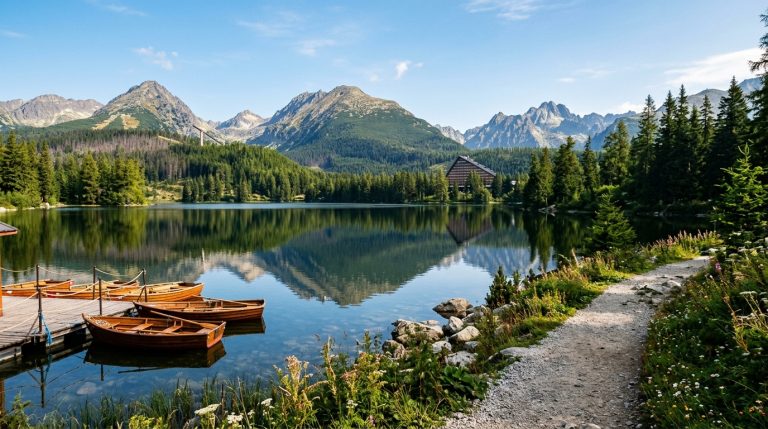
Beginner hiking guide to Slovakia’s High Tatras. Discover the best scenic trails around Štrbské Pleso, Popradské Pleso, mountain hut culture, and essential safety.

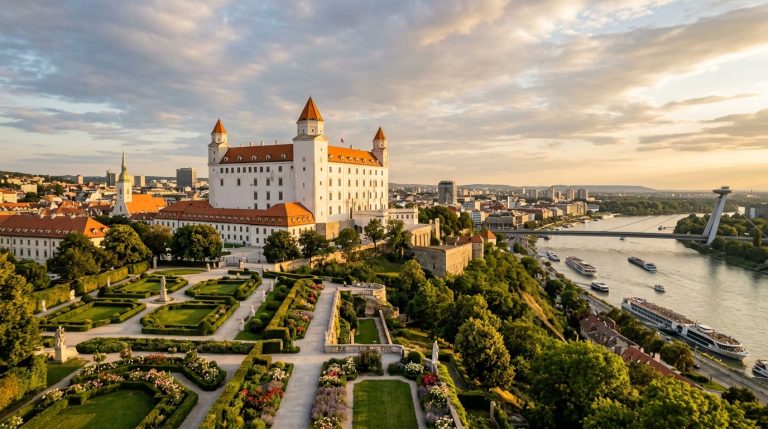
Comprehensive visitor guide to Bratislava Castle (Bratislavský hrad). Discover ticket prices, museum collections, Baroque gardens, viewpoints, and walking routes.

Complete 24-hour walking tour itinerary for Bratislava, Slovakia. Discover Old Town landmarks, Bratislava Castle, Michael’s Gate, authentic Slovak food, and transit connections.

What you need to know about czechoslovakia alphabet: Central European travel requires clear, authoritative insights. For travelers and expats researching czechoslovakia alphabet, understanding the cultural context, local regulations, pricing, transit routes, and authentic regional alternatives ensures a seamless, high-value journey across Prague and the wider Czech Republic. Planning a trip through Central Europe brings numerous…

What you need to know about czechoslovakia language: Central European travel requires clear, authoritative insights. For travelers and expats researching czechoslovakia language, understanding the cultural context, local regulations, pricing, transit routes, and authentic regional alternatives ensures a seamless, high-value journey across Prague and the wider Czech Republic. Planning a trip through Central Europe brings numerous…

What you need to know about czechoslovakian alphabet: Central European travel requires clear, authoritative insights. For travelers and expats researching czechoslovakian alphabet, understanding the cultural context, local regulations, pricing, transit routes, and authentic regional alternatives ensures a seamless, high-value journey across Prague and the wider Czech Republic. Planning a trip through Central Europe brings numerous…

Are you planning a budget trip to Eastern Europe? Wondering whether Bratislava or Prague is more affordable? In this article, we’ll compare prices for accommodation, food, transportation, and attractions in both cities to help you make an informed decision.

Prague and Istanbul are approximately 1,500 kilometers apart, making it a manageable journey for European travel enthusiasts. Whether by plane, train, or bus, there are various options available to explore these vibrant cities and their cultural riches.

Prague is approximately 300 kilometers away from Slovakia. The journey can take around 4-5 hours by car or train, making it a convenient and scenic option for European travel.

When planning a trip from Budapest to Prague, there are several travel routes to consider depending on your preferences for speed, cost, and scenic views. The distance between the two cities is approximately 530 kilometers, and you can choose to travel by bus, train, or car, each offering its unique advantages. Researching and comparing the options available will help you choose the route that best suits your travel needs.

Are you planning a trip from Prague to Budapest? While there isn’t a fast train connecting the two cities directly, you can still enjoy a convenient rail journey. Multiple trains run daily, with a transfer in Vienna. This route offers stunning views and comfortable amenities, making it a popular choice among travelers. So sit back, relax, and enjoy the scenic ride as you make your way from Prague to Budapest.

The splitting of Czechoslovakia into independent nations, Czech Republic and Slovakia, occurred peacefully on January 1st, 1993. This significant event marked the end of a common state formed after World War I. Despite shared history, cultural ties, and political changes, Czech and Slovak people embarked on separate paths, strengthening their own identities while maintaining close relations. Understanding this historical perspective is key to comprehend the dynamics and relationship between these two Central European countries.