
Is Czechia Cheap to Visit? Realistic Travel Costs and Budget Breakdown
✨ This article was AI edited. Editorial responsibility: Magazine of Travel.
Is Czechia cheap? Yes, Czechia remains one of Central Europe’s most affordable travel destinations, offering significantly lower costs for food, public transport, and beer than Western European countries, with average daily budgets ranging from $45 for backpackers to $120 for mid-range travelers, though central Prague commands higher hotel rates.
Planning a trip to Central Europe inevitably brings up a vital financial question: is Czechia cheap compared to its neighbors? While inflation and post-pandemic tourism have adjusted price levels across the continent, the Czech Republic continues to deliver remarkable value for international visitors. Whether you are savoring world-renowned Pilsner lagers, exploring UNESCO-listed medieval castles, or riding seamless nationwide rail networks, your travel funds stretch considerably farther here than in France, Germany, or Austria.
In this comprehensive financial guide, we break down realistic daily budgets, dining prices, lodging expenses, transit costs, and money-saving strategies so you can plan your Czech adventure with absolute financial clarity.
Daily Travel Budgets in Czechia: What to Expect
Understanding realistic daily expenditure allows you to plan your itinerary without financial surprises. Costs vary between the capital and charming regional gems like Brno, Český Krumlov, Plzeň, and Olomouc.
| Traveler Style | Daily Budget (CZK) | Daily Budget (USD / EUR) | Typical Inclusions |
|---|---|---|---|
| Budget / Backpacker | 950 – 1,350 CZK | $42 – $60 USD (€38 – €55) | Hostel dorm bed, tram passes, supermarket breakfasts, local pub daily lunch specials (meníčka). |
| Mid-Range Traveler | 2,200 – 3,400 CZK | $98 – $150 USD (€90 – €138) | Private boutique hotel room, sit-down restaurant dinners, museum admissions, craft beers and café stops. |
| Luxury Traveler | 5,500+ CZK | $245+ USD (€225+) | 5-star historic palace hotel, fine dining tasting menus, private chauffeur transfers, exclusive private tours. |
Food and Dining Costs: The Famous Daily Lunch Menu (Meníčko)
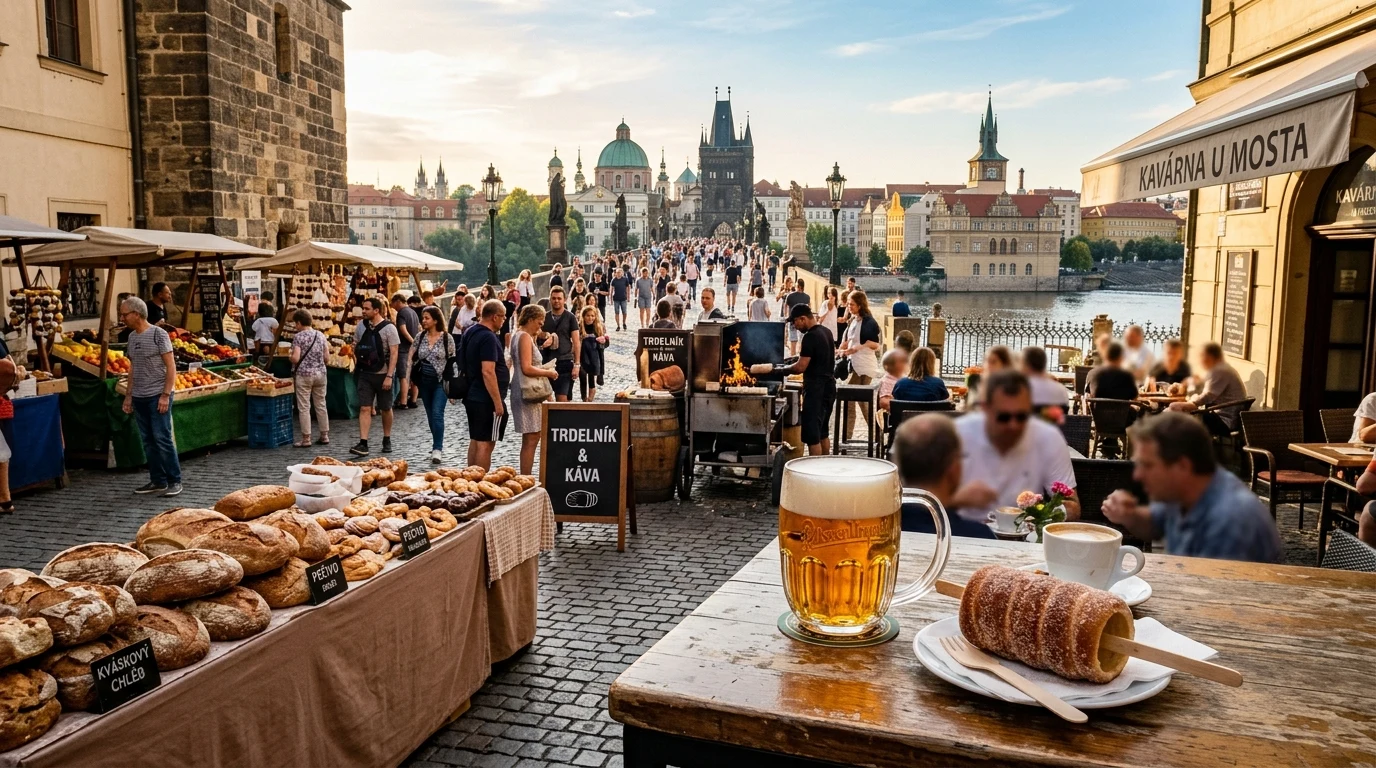
Dining out in Czechia is remarkably economical, particularly if you align with authentic local dining habits. On weekdays between 11:00 AM and 2:00 PM, virtually every traditional pub (hospoda) and neighborhood restaurant serves a denní menu (daily lunch menu). For approximately 160 to 230 CZK ($7 – $10 USD), diners receive a hearty traditional main dish—such as svíčková na smetaně (beef tenderloin in root vegetable cream sauce), goulash with handmade bread dumplings, or roast pork with sauerkraut—frequently accompanied by a complimentary bowl of hot soup.
In contrast, tourist-heavy dining establishments surrounding Prague’s Old Town Square and Charles Bridge charge elevated international prices. Simply walking two or three blocks away into residential quarters such as Vinohrady, Karlín, or Žižkov drops your bill by 40% to 50% while markedly enhancing culinary quality and authenticity.
For visitors budgeting their stay in the capital, reviewing how much spending money is needed for 3 days in Prague offers detailed scenarios. Furthermore, discover the fascinating cultural background of why beer is so cheap in the Czech Republic, where a half-liter pint of fresh draft lager in local taverns often costs less than bottled sparkling water (typically 50 to 65 CZK, or $2.20 – $2.90 USD).
Accommodation Expenses Across Czech Regions
Accommodation represents the largest single expense on your travel balance sheet. Prague experiences seasonal surges, particularly during May, September, and the vibrant Christmas market festivities throughout December. However, outside the capital, regional cities offer astounding luxury at modest rates throughout the entire calendar year.
- Design Hostels in Prague: Modern boutique hostels (such as Sir Toby’s or Sophie’s Hostel) cost roughly 480 to 850 CZK ($21 – $38 USD) per night for a dormitory bunk with clean linens and high-speed Wi-Fi.
- Mid-Range 3-Star and 4-Star Hotels: Modern double rooms with private en-suite bathrooms and generous buffet breakfasts average 1,800 to 2,900 CZK ($80 – $130 USD) outside major holiday weekends.
- Apartment Rentals: Well-equipped studio apartments in safe residential neighborhoods like Holešovice or Smíchov range from 1,500 to 2,400 CZK ($66 – $105 USD) per night, allowing travelers to prepare light meals.
- Secondary Cities (Brno, Plzeň, Liberec): Hotel tariffs decline by roughly 30% to 45% compared to Prague. Exploring the vibrant nightlife in Brno reveals a bustling university metropolis where cocktails, craft brews, and hotel rooms cater directly to student and local budgets.
Public Transportation and Nationwide Rail Travel
Public transport throughout Czechia is famously punctual, dense, clean, and remarkably affordable. In Prague, an integrated transit ticket covering metro lines, historic trams, city buses, and even the Petřín funicular railway costs just 30 CZK ($1.30 USD) for 30 minutes, or 120 CZK (approximately $5.30 USD) for a full 24-hour pass with unlimited transfers.
For cross-country explorations, state-owned České dráhy (Czech Railways) alongside innovative private rail carriers like RegioJet and Leo Express operate high-frequency intercity lines. A scenic train ride between Prague and Brno or Olomouc rarely exceeds 250 to 420 CZK ($11 – $19 USD) in comfortable modern carriages equipped with electrical outlets, air conditioning, free Wi-Fi, and complimentary Italian coffee service.
Travelers weighing multi-city Central European itineraries should compare which is better: Budapest or Prague as well as travel logistics covering how long the train takes from Budapest to Prague to maximize overland route efficiency.
Currency, Exchange Rates, and Banking Traps
Although the Czech Republic is an active European Union member state, it has retained its national currency. The official legal tender is the Czech Koruna (CZK), symbolized locally as Kč. Understanding what currency is used in Prague and the macroeconomic timeline for when the Czech Republic might transition to the euro protects visitors from deceptive tourist traps.
Crucially, travelers must avoid yellow-and-blue standalone Euronet ATMs found along tourist thoroughfares, which impose predatory exchange rates and exorbitant conversion fees. Always withdraw cash from certified domestic bank branches (such as Česká spořitelna, Komerční banka, or ČSOB), and always decline Dynamic Currency Conversion (DCC), opting to be billed in local CZK.
Top 5 Practical Money-Saving Strategies for Czechia
- Drink Tankové Pivo (Tank Beer): Seek out pubs advertising Plzeň z tanku or tankovna. Unpasteurized tank beer stored in temperature-controlled vacuum tanks delivers peak freshness at fair, local-regulated prices.
- Take Advantage of Free Museum Days: The National Gallery Prague and National Museum frequently host free admission days on national holidays and select weekday evenings.
- Use the PID Lítačka Mobile App: Purchase Prague public transport tickets digitally on your smartphone to avoid searching for coin-operated validation machines.
- Shop at Local Farmers Markets: Weekend farmers markets at Náplavka on the Vltava riverbank and Jiřího z Poděbrad offer fresh farm cheeses, sourdough breads, hot sausages, and seasonal fruits at fraction-of-restaurant prices.
- Venture Beyond the Capital: Board an early morning regional train to Kutná Hora’s bone church, the sandstone towers of Bohemian Paradise (Český Ráj), or Moravian wine cellars in Mikulov for rich cultural excursions at half the capital’s cost.
Frequently Asked Questions
Is Prague more expensive than Vienna or Berlin?
Yes, Prague is substantially cheaper than both Vienna and Berlin. On average, dining out, public transportation, and casual entertainment in Prague cost 30% to 45% less than in Austrian or German metropolitan centers, making it one of the premier value destinations in Europe.
Can I use Euros to pay for goods in Czech supermarkets?
While some large international supermarket chains and major downtown souvenir stores accept Euro banknotes, any change is returned in Czech Korunas at disadvantageous merchant exchange rates. You will achieve significantly better rates by paying via contactless credit card or withdrawing CZK from bank ATMs.
How much does a typical dinner cost for two in Prague?
A satisfying three-course dinner for two at a traditional neighborhood Czech restaurant—including two main meat entrees, side dumplings, a shared salad, and two pints of draft Pilsner beer—typically totals between 600 and 950 CZK ($27 to $42 USD), representing exceptional value.
Získejte naše nejnovější články, návody a tipy přednostně ve vyhledávání Google a v AI přehledech.


