
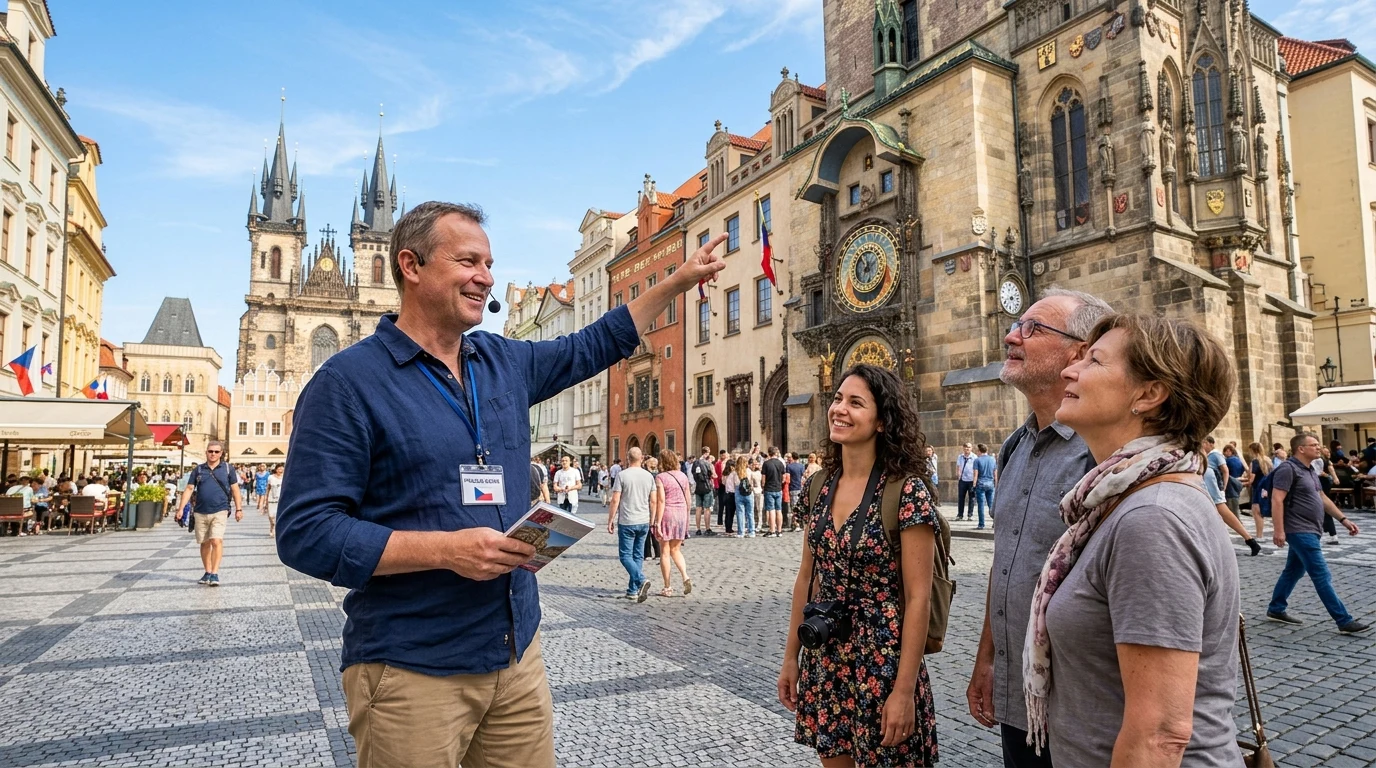
Prague Pronunciation Guide: How Locals Say Praha and Common Mistakes
✨ This article was AI edited. Editorial responsibility: Magazine of Travel.
How to pronounce Prague? In English, Prague is pronounced /prɑːɡ/ (rhyming with “clog” in British English) or /prɑːɡ/ (similar to “prog” in American English). In the native Czech language, the city is named Praha and pronounced /ˈpra.ɦa/, with a rolled “r” and a voiced “h” sound.
Mastering correct Prague pronunciation is one of the most rewarding first steps any traveler can take before landing in the Czech Republic’s fairytale capital. While English speakers across the globe recognize the international spelling “Prague”, hearing how local Czech residents say the name of their own historic city—and understanding why the spellings diverge—offers immediate cultural insight into Slavic linguistic heritage.
In this guide, we explore the exact phonetics of Prague in both major English accents and native Czech, highlight frequent mispronunciations, explain the legendary etymology of the name, and provide practical conversational phrases every traveler should know.
English Pronunciation of Prague: UK vs US Differences
In the English-speaking world, pronunciation varies subtly across regional accents, primarily focusing on vowel duration and openness:
| Dialect | IPA Transcription | Phonetic Spelling | Rhymes With |
|---|---|---|---|
| British English (RP) | /prɑːɡ/ | PRAHG | Clog / Frog (with a broad open “ah” sound) |
| American English (General) | /prɑːɡ/ | PRAHG | Bog / Jog (open back unrounded vowel) |
| Australian English | /prɑːɡ/ | PRAHG | Similar to British with lengthened vowel tone |
A frequent error among novice travelers is attempting to pronounce the word as “Pray-g” (rhyming with plague). This pronunciation is considered incorrect in both modern English standards and international travel contexts. The vowel should always remain open and rounded: Prahg.
How Locals Say It: The Native Czech Pronunciation (Praha)
If you look at tram stops, metro station signs, highway exits, or train timetables across the country, you will never see the word “Prague”. The official native name of the capital is Praha. The word consists of two balanced syllables: Pra-ha.
Breaking down each phonetic component helps English speakers pronounce it like a native resident of Malá Strana or Vinohrady:
- The ‘P’ sound: A crisp, voiceless bilabial plosive, identical to the English ‘p’ in “park”.
- The ‘R’ sound: In Czech, the letter ‘r’ is an alveolar trill (a lightly rolled or tapped ‘r’, similar to Italian or Spanish). Your tongue taps once or twice against the alveolar ridge behind your upper teeth.
- The first ‘A’: A short, open front unrounded vowel, sounding like the “u” in “cup” or the “a” in father.
- The ‘H’ sound: Unlike the soft, breathy English ‘h’ (which is voiceless), the Czech ‘h’ is a voiced glottal fricative (IPA: [ɦ]). It is produced with vocal cord vibration, creating a warmer, deeper resonance in the throat.
- The final ‘A’: Short and crisp, identical to the first vowel. It does not trail off into an English schwa (“uh”).
Putting it together, pronounce it smoothly: [ˈpra.ɦa] with stress placed firmly on the very first syllable. In the Czech language, the stress is always placed on the first syllable of a word.
The Mythological Origin of the Name “Praha”
Why is the city called Praha? According to ancient Bohemian chronicles documented by Cosmas of Prague in the 12th century, the legendary prophetess Princess Libuše stood on the cliffs of Vyšehrad overlooking the forested Vltava river valley and prophesied: “I see a great city whose glory will touch the stars.”
She instructed her people to journey into the forest where they would find a man hewing a threshold (práh in Czech) for his home. On that very site, she decreed, they must build a fortress named Praha (derived from práh, signifying threshold). Historically and geologically, this also referred to the natural river rapids or rocky riverbed thresholds across the Vltava that allowed merchants to ford the river before the stone Charles Bridge was constructed.
Understanding this historical context enriches your exploration. Check out our curated guide on what Prague is known for and its hidden architectural charms, as well as essential tips on must-do experiences in Prague according to seasoned travelers.
Grammar Note: Why You See “Praze” or “Prahu” on Street Signs
Czech is a highly inflected Slavic language featuring seven distinct grammatical cases. Depending on how the city is referenced in a sentence, the ending of the word changes:
| Czech Form | Grammatical Case | English Meaning | Real-World Sign Example |
|---|---|---|---|
| Praha | Nominative | Prague (subject) | Train destination display: Praha hl.n. (Main Station) |
| do Prahy | Genitive | To Prague (motion towards) | Highway direction sign: D1 směr do Prahy |
| v Praze | Locative | In Prague (location) | Posters and event schedules: Koncert v Praze |
| Prahou | Instrumental | Through / by Prague | Transit maps: Cesta Prahou (Journey through Prague) |
Recognizing these variations prevents confusion when reading metro maps, intercity bus routes, and regional train schedules.
Essential Czech Travel Phrases with Pronunciation
Locals deeply appreciate it when international guests make an effort to use basic courtesies in their native tongue:
- Dobrý den (Good day / Hello) — DOH-bree den
- Děkuji (Thank you) — DYEH-koo-yee
- Prosím (Please / You’re welcome) — PROH-seem
- Promiňte (Excuse me / Sorry) — PROH-miñ-teh
- Na shledanou (Goodbye) — NAH SKHLEH-dah-noh
- Jedno pivo, prosím (One beer, please) — YED-noh PEE-voh PROH-seem
Frequently Asked Questions
Why do English speakers say Prague instead of Praha?
The English name “Prague” was borrowed from the French spelling and pronunciation during the late Middle Ages and Renaissance, when French served as the lingua franca of European diplomacy, cartography, and scholarly literature.
Is the ‘r’ in Praha rolled like in Spanish?
Yes, the standard ‘r’ in Czech is an alveolar tap or trill, similar to Spanish or Italian. However, do not confuse it with the uniquely challenging Czech consonant ř (as in Dvořák), which is an alveolar fricative trill found almost exclusively in Czech phonology.
Do people in Prague speak English well?
Yes, English proficiency is exceptionally high in Prague, particularly among hospitality staff, hotel personnel, restaurant servers, and younger generations. In shops, museums, and transport hubs, English is widely spoken and understood.
Získejte naše nejnovější články, návody a tipy přednostně ve vyhledávání Google a v AI přehledech.


