
What Is the Main Language Spoken in Prague? Linguistic Overview
Prague, the enchanting capital of the Czech Republic, is a city that effortlessly blends its rich history with a vibrant cosmopolitan atmosphere. As you explore its picturesque streets and soak in the magnificent architecture, you might wonder: what is the main language spoken in this captivating city? The answer lies in the heart of the Czech culture. Czech, a West Slavic language, takes the center stage in Prague. While English is commonly spoken in tourist areas, understanding a few basic Czech phrases can enhance your experience and help you connect with the locals on a deeper level. In this linguistic overview, we will explore the nuances of the Czech language and its significance in Prague’s unique cultural tapestry.
Main Language Spoken in Prague: An Introduction to the Linguistic Landscape
Prague, the enchanting capital of the Czech Republic, is a city steeped in history, art, and culture. As a popular tourist destination, one might wonder what the main language spoken in Prague is. The answer is simple: Czech. Czech is the official language of the Czech Republic and is spoken by the majority of Prague’s residents. But don’t worry if you don’t speak Czech, as English is widely understood and used in many parts of the city.
Czech, a West Slavic language, shares some similarities with other Slavic languages such as Polish or Slovak. It has a rich and complex grammar system, including seven cases for nouns, adjectives, and pronouns, which may seem daunting to non-native speakers. However, many locals have a good command of English, especially in the tourist areas, making it relatively easy for visitors to communicate, navigate, and ask for assistance. This bilingualism also extends to official signage, menus, and touristic information, which are often available in both Czech and English. So, whether you’re exploring the historic Old Town, visiting the majestic Prague Castle, or simply indulging in the city’s vibrant culinary scene, language won’t be a barrier to your Prague adventure.
Language Diversity in Prague: A Melting Pot of Linguistic Influences
Prague, the capital city of the Czech Republic, is a true melting pot when it comes to language diversity. As a result of its rich history and geographical location, Prague has been influenced by various linguistic factors over the centuries. While the official language spoken in Prague and throughout the country is Czech, the city boasts a vibrant multilingual atmosphere that creates a unique linguistic tapestry.
One of the most prominent factors contributing to language diversity in Prague is its historical connection to German-speaking regions. For centuries, Prague served as an important cultural and economic center for the Austro-Hungarian Empire which greatly influenced the city’s linguistic makeup. As a result, German remains widely spoken and understood, particularly among older generations. However, due to globalization and the increased prevalence of English as a global lingua franca, English is steadily gaining popularity among younger Czechs and is widely spoken in tourist areas and business settings.
Czech Language: The Official Language of Prague
Prague, the capital city of the Czech Republic, boasts a rich linguistic landscape that centers around the Czech language. As the official language of the city, Czech is spoken by the majority of Prague’s residents and is the primary means of communication in everyday life. With its unique Slavic roots and distinct pronunciation, Czech offers a glimpse into the fascinating history and culture of this enchanting city.
But you don’t have to be fluent in Czech to navigate through Prague smoothly. English is widely understood and spoken, especially among the younger generation, making it relatively easy for international visitors to communicate. Additionally, you may come across other languages like German and Russian, as these have historical ties to the region and are still spoken by some locals. To fully immerse yourself in the city’s linguistic diversity, consider learning a few basic Czech phrases, such as “dobrý den” (hello), “prosim” (please), and “děkuji” (thank you), which will undoubtedly enhance your experiences while exploring Prague’s charming neighborhoods and iconic landmarks. So whether you’re strolling across Charles Bridge or indulging in delicious local cuisine, the Czech language is an integral part of the authentic Prague experience, encapsulating its rich heritage and cultural traditions.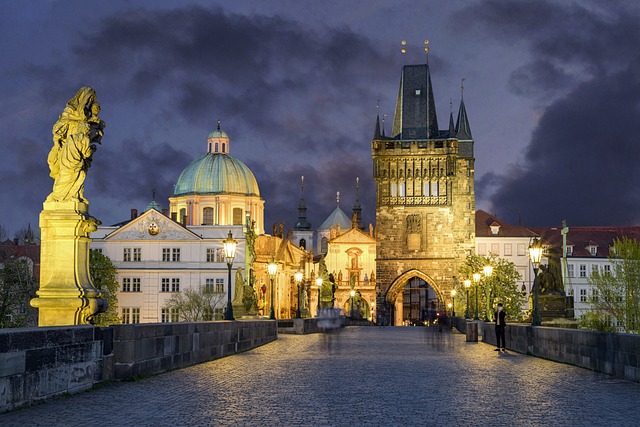
Prague’s Linguistic History: From German to Czech Dominance
Prague, the enchanting capital of the Czech Republic, has a rich linguistic history that reflects the ebb and flow of different cultures and influences over the centuries. Once dominated by German, the language landscape of Prague shifted dramatically as Czech gained prominence to become the main language spoken in the city.
During the Austro-Hungarian Empire’s reign in the 18th century, German was the official language of Prague. It was widely used in administration, education, and formal settings. However, the Czech National Revival movement in the 19th century played a significant role in reviving and promoting the Czech language. This movement sparked a strong sense of national identity and cultural pride, leading to a resurgence of Czech language and literature. Today, Czech is the primary language spoken by the majority of Prague’s inhabitants and is recognized as the official language of the Czech Republic.
The transition from German dominance to Czech linguistic predominance was not immediate. It took time for the Czech language to reclaim its place in daily life, but its resurgence continued to grow throughout the 20th century. The language started to gain prominence in education, business, media, and even the arts, making it an essential component of Prague’s cultural fabric. While German still holds historical importance, particularly among the elder generation, Czech has firmly established itself as the main language spoken in Prague. Whether you’re exploring the breathtaking architecture of Prague Castle or savoring the city’s famous goulash, learning a few key Czech phrases can greatly enhance your experience as you immerse yourself in the local culture and connect with its warm-hearted residents.
Bilingualism and Multilingualism in Prague: Common Language Practices
Prague, the capital city of the Czech Republic, is a fascinating hub of language diversity. While Czech is the official language spoken by the majority of the population, English has gradually become more widely spoken, especially among the younger generation. This can be attributed to the increasing influence of globalization and the city’s booming tourism industry. English is commonly used in tourist areas, hotels, restaurants, and shops, making it easier for visitors to communicate and navigate the city. Additionally, many expats, students, and professionals who relocate to Prague for work or study purposes often speak English, creating a vibrant bilingual environment.
Apart from Czech and English, other languages are also spoken in Prague due to its multicultural and international character. German and Russian are commonly heard, as there is a significant population of German-speaking and Russian-speaking residents. The city also attracts tourists and foreigners from all corners of the world, resulting in a beautiful mix of languages, such as Spanish, French, Italian, and Mandarin. This linguistic diversity is especially prominent in multinational companies, international schools, and universities, where students and employees come from various cultural backgrounds. Overall, Prague embraces multilingualism, fostering a rich linguistic tapestry that reflects its cosmopolitan atmosphere.
Foreign Languages in Prague: English as a Lingua Franca
Although Czech is the official language spoken in Prague, English has gained significant popularity as a lingua franca in the city. With the rise in tourism and the influx of international businesses, English has become a widely spoken language among locals and expatriates alike. Here is an overview of English as a foreign language in Prague:
1. English in the Education System:
– English is taught as a compulsory subject in Czech schools, starting from a young age.
– Many universities and language schools offer English language courses and programs for both locals and foreigners.
– Bilingual schools and international schools in Prague provide education in English, attracting a diverse community of students.
2. English in the Workplace:
– With numerous multinational companies establishing their offices in Prague, English has become a common language of communication in the workplace.
– Many job opportunities require at least a basic level of English proficiency, especially in sectors such as tourism, IT, finance, and hospitality.
– English language skills significantly enhance employment prospects, as it opens doors to international career opportunities.
Furthermore, due to the city’s vibrant expat community and the large number of tourists visiting Prague, English is widely spoken in various social settings. Restaurants, bars, and shops often have English-speaking staff, and menus, signs, and information are frequently available in English as well. In conclusion, while Czech remains the dominant language in Prague, the prominence of English as a lingua franca reflects the city’s global outlook and openness to the international community.
The Importance of Czech: Tips for Visitors and Language Learners
Prague, the stunning capital city of the Czech Republic, welcomes millions of visitors each year. As a visitor or language learner, understanding the main language spoken in Prague is essential for a smoother and more immersive experience. Czech, an intriguing and melodic language, is the primary language spoken in Prague. Here are some important tips and insights for visitors and language learners looking to navigate the linguistic landscape of this beautiful city.
1. Basic Greetings and Courtesies: Learning a few key phrases and expressions in Czech can go a long way in establishing a positive connection with the locals. Start by mastering greetings such as “Dobrý den” (Good day) and “Děkuji” (Thank you). Remember to pronounce the peculiar sounds of Czech, such as the soft “ř” and the “ch,” which may take some practice.
2. English Proficiency: While Czech is the main language spoken in Prague, don’t fret if you’re not fluent in it. English is widely understood, especially in tourist areas, hotels, and restaurants. However, learning a few essential Czech phrases can greatly enhance your interactions with locals and showcase your interest in their culture. Embrace the opportunity to communicate in Czech whenever possible; it’s a wonderful way to connect with the locals and fully experience the charming atmosphere of Prague.
3. Language Apps and Resources: For those keen on diving deeper into Czech, there are various language learning apps and resources available. These tools offer comprehensive courses, vocabulary exercises, and interactive lessons to help you grasp the fundamentals of the language. Some popular apps include Duolingo and Babbel, which provide user-friendly interfaces and engaging content. Additionally, websites like Transparent Language and CzechClass101 offer resources tailored specifically for learners of Czech.
By familiarizing yourself with the importance of the Czech language in Prague and implementing these tips, you’ll enrich your travel experience and make meaningful connections with the locals. Immerse yourself in the beauty of Prague’s language, culture, and history – a journey that will undoubtedly leave lasting memories.
Cultural Etiquette: Embracing the Czech Language in Daily Life
In the vibrant city of Prague, embracing the Czech language in daily life can greatly enhance your cultural experience and help you connect with locals on a deeper level. While English is generally understood and spoken in main tourist areas, learning a few basic Czech phrases can go a long way in showing respect for the local culture and facilitating communication in various situations.
Here are some important aspects of Czech language etiquette to keep in mind:
- Greetings: When entering a shop, restaurant, or any public space, it is customary to offer a polite “Dobrý den” (Good day) or “Ahoj” (Hello) to acknowledge the presence of others.
- Thank You: Expressing gratitude is essential in Czech culture. Use “Děkuji” (Thank you) to show appreciation and “Prosím” (Please) when making a request or politely asking for something.
- Basic Phrases: Learning a few simple phrases like “Ano” (Yes), “Ne” (No), “Promiňte” (Excuse me), and “Mluvíte anglicky?” (Do you speak English?) can help bridge language barriers and make interactions smoother.
It is important to note that Czech is a complex language, but making an effort to speak even a few words in Czech can show your respect and appreciation for the local culture. Locals will often appreciate your attempt and may even be more inclined to help you out if they see you are making an effort to communicate in their language.
While mastering the Czech language may not be feasible during a short visit, embracing the local language in Prague can enrich your experience, foster cultural understanding, and open up opportunities for meaningful connections with locals.
Language Resources in Prague: Learning Czech Made Easy
In Prague, the main language spoken by locals is Czech. As the official language of the country, it is not surprising that Czech dominates the linguistic landscape of the city. While English has gained popularity and is widely understood, especially in tourist areas and among younger generations, having some basic knowledge of Czech can greatly enhance your experience in Prague. Fortunately, there are numerous language resources and learning opportunities available to help make mastering Czech an exciting and achievable goal.
When it comes to learning Czech in Prague, you’ll find a variety of options tailored to different needs and preferences. Language schools offer comprehensive courses designed for beginners, intermediate learners, and even those who wish to achieve fluency. These courses cover various aspects of the Czech language, including grammar, vocabulary, pronunciation, and conversation skills. Whether you prefer a traditional classroom setting or prefer one-on-one instruction, there are language schools with experienced instructors who can guide you on your language learning journey. Additionally, many language schools in Prague offer flexible schedules, allowing you to fit your Czech lessons around your daily life. To top it off, some language schools even offer specialized courses for specific purposes, such as business Czech or exam preparation.
Navigating Prague’s Language Barrier: Useful Tools and Strategies
Prague, the capital city of the Czech Republic, predominantly speaks Czech. While Czech is the official language and widely spoken by the locals, English is also commonly used, especially in tourist areas, hotels, and restaurants. In recent years, due to globalization and the increasing number of international visitors, English has become more prevalent, making it relatively easy for tourists to communicate in the city.
For visitors who do not speak Czech, there are several useful tools and strategies to help navigate Prague’s language barrier. One helpful tool is language translation apps, such as Google Translate, which can translate text and even conversations in real-time. These apps can be particularly handy for deciphering menus, signs, or engaging in basic conversations. Additionally, many establishments, including shops and restaurants, provide menus or signs in both Czech and English, allowing visitors to easily understand and communicate their needs.
- Language translation apps like Google Translate
- Menus and signs in both Czech and English
- Basic English proficiency among locals
Moreover, it is always helpful to learn a few key phrases in Czech to enhance your experience in Prague. While many locals speak English, making an effort to communicate in their language can be greatly appreciated and open doors to a more authentic cultural experience. Mastering simple greetings, phrases for ordering food or asking for directions can go a long way.
In conclusion, while Czech is the main language spoken in Prague, English is also widely understood, and visitors have numerous tools and strategies at their disposal to overcome any language barriers. From translation apps to bilingual menus and friendly locals, navigating Prague’s language barrier is easily achievable for tourists seeking to explore this beautiful city.
Key Takeaways
In conclusion, Prague, the stunning capital city of the Czech Republic, boasts a rich linguistic landscape that reflects the nation’s historical and cultural tapestry. While the primary language spoken by the majority of Prague’s inhabitants is Czech, English has gained prominence as an essential language for communication and tourism. As a pragmatic approach, locals generally welcome English-speaking visitors and strive to provide assistance whenever possible.
Throughout this linguistic overview, we have explored the multilayered linguistic diversity present within Prague, including the influence of historical events and the evolving cultural landscape. Moreover, we have discussed the availability of language services and the growing importance of English in various domains, such as education, commerce, and tourism.
Key takeaways from this article include recognizing Czech as the primary language in Prague, appreciating the increasing prevalence of English as a lingua franca, and understanding the significance of language proficiency for successful interaction within this captivating city. By acknowledging and embracing the linguistic nuances of Prague, visitors can enhance their cultural experiences while forging meaningful connections with its residents. So, whether you are planning a trip or simply interested in expanding your language knowledge, Prague has much to offer in terms of linguistic exploration.


